
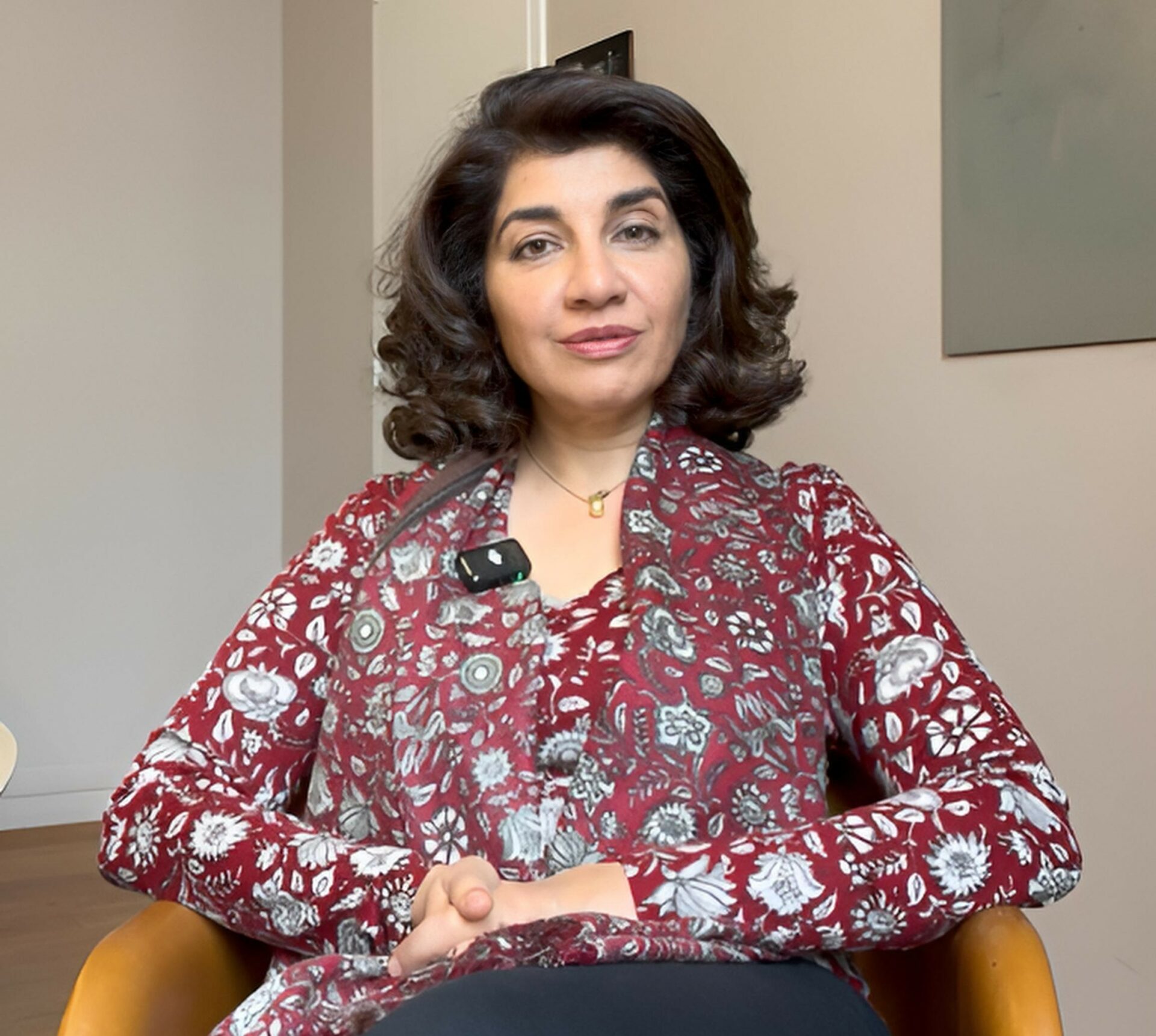

Sabira Razaali, a French-Malagasy entrepreneur, saw her life turn upside down after asking for a divorce from a husband close to those in power. Harassed, arbitrarily arrested, and facing multiple legal proceedings, she fled Madagascar for France, from where she continues her fight.
Her personal story echoes the new political crisis currently shaking Madagascar: youth-led protests against shortages and rampant corruption have led to the flight of President Andry Rajoelina and his main advisor Mamy Ravatomanga, as well as to the army’s seizure of power.
Targeted by an international arrest warrant issued by the previous regime, Sabira Razaali denounces a corrupt, patriarchal system controlled by political elites. An exclusive interview for The Women’s Voices.
Can you take us back to how it all began ?
Ever since I decided to divorce my husband in Madagascar, everything has gone downhill. My husband and his family were very close to the former regime, and I suddenly found myself caught in a whirlwind of things I hadn’t anticipated, simply because people connected to those in power went after me and my son.
I filed for divorce after several attempts to reach an amicable agreement. And as soon as he was served the divorce papers, I suddenly found myself facing a complaint. I was taken away by the economic police. My lawyer immediately told me: “Madame, when it’s the economic police, it’s automatically political.” So it was very serious.
I was brought to their offices and interrogated with my eldest son. At the end of the day, after a baseless interrogation, an officer came to me and said: “Madame, I’m very ashamed, but we’ve received orders from very high up and we are obliged to place you in custody.” We were locked up, and during the night, we got a call: “You can be released right away if you come sign the papers we’ve prepared.” I refused.
Fortunately, I was able to contact the embassy, particularly the First Secretary at the time, who came to see us the next morning. Despite his efforts, we were only able to meet the Minister of Police late in the day, and that’s where I found my husband. I wanted a divorce, and suddenly the Minister of Police was handling it. He simply told me: “Madame, I advise you to find a solution; otherwise, by Saturday or Monday, you’ll be referred to the prosecutor.” And where I’m from, being referred to the prosecutor automatically means pre-trial detention.
Do you still have faith in Madagascar’s institutions ?
Not as I knew them. The justice system is rotten. It only functions through corruption and connections. My ex-husband had powerful backing, including a very well-known advisor close to the former president. Unfortunately, justice in Madagascar is deeply corrupt.
Do you think it was harder because you’re a woman ?
Most certainly. Being a woman doesn’t make things any easier. And on top of that, I hurt a man’s ego. The goal was to break me completely, destroy my reputation, my work, the project that was my life, and make me come back humiliated and empty-handed. It was also a warning to other women who might think of divorcing: this is what happens when you try.
But I want to send them a message of courage and hope, that they dare, precisely after seeing what I went through, to free themselves from an outdated, patriarchal system, because they can do it. Their lives and their freedom belong to them.
How do you view the current protest movement in Madagascar ?
At first, it started with simple demands, electricity and water, which have been serious problems for months, even years. Then the movement grew into broader demands: the right to justice, an end to corruption, a fair system… basic things in a democracy that, sadly, we no longer had. Protesters called out corruption by name. And I think today we finally have the chance to go all the way to investigate and bring to light the people who kept the country from functioning as it should have.
What do you hope for Madagascar today ?
There’s immense hope rising for the people, for me, for the youth. The hope of having a truly free and democratic country, where justice is respected and corruption no longer reigns. A country where basic needs like electricity and water are restored, and where there’s no corruption in public tenders, whether in business, healthcare, education, or social affairs.