

The publication of new documents linked to the Jeffrey Epstein investigation has once again reignited one of the most explosive legal and political scandals of the past decades in the United States.
On Thursday, the U.S. Department of Justice released additional reports from the Federal Bureau of Investigation (FBI) dating back to 2019. The documents summarize interviews with a woman who claimed she had been sexually assaulted as a minor in the 1980s.
In her statements, the woman accuses convicted sex offender Jeffrey Epstein but also mentions Donald Trump, then a real estate magnate who would later become President of the United States.
The allegations referenced in the documents remain uncorroborated, and no evidence supporting them has been publicly established. Their publication nevertheless comes at a politically sensitive moment, as the Epstein archives continue to be gradually released under pressure from Congress and public scrutiny.
Testimony collected after Epstein’s 2019 arrest
The FBI reports describe four interviews conducted between July and October 2019 with the woman, whose identity has been redacted in the publicly released documents.
She contacted authorities shortly after the arrest of Jeffrey Epstein in July 2019. During the interviews, she stated that she had been sexually assaulted by Epstein when she was a minor.
According to the FBI summary, during her second interview, the woman claimed that Epstein had taken her to New York or New Jersey when she was between 13 and 15 years old.
During that trip, she said, Epstein introduced her to Donald Trump.
The report indicates that she alleged Trump sexually abused her during that encounter.
However, during the fourth and final interview in October 2019, the woman reportedly declined to provide further details when FBI agents asked additional questions about the alleged interaction with Trump.
The documents also note that the alleged events would have taken place in the early or mid-1980s, a period during which investigators have not established confirmed ties between Donald Trump and Jeffrey Epstein.
A release linked to controversy surrounding the “Epstein Files”
The publication of these documents comes amid renewed controversy surrounding the release of the so-called “Epstein Files.”
On February 25, the U.S. Department of Justice announced it was reviewing whether certain documents should have been included in the public database related to the Epstein investigation.
Several American media outlets had reported that documents mentioning Donald Trump were absent from the files initially released, prompting accusations of a possible cover-up by Democratic lawmakers.
In a statement published Thursday evening, the Justice Department explained that the interviews had previously been mistakenly categorized as duplicates of other documents, and were therefore omitted from the public archive.
The newly released material is part of a much broader transparency effort.
On January 30, the Justice Department published more than three million pages of partially redacted documents related to the Epstein investigation.
The disclosure followed legislation adopted by Congress requiring federal authorities to make available a vast number of records linked to the financier’s criminal case.
The White House dismisses the allegations
The White House responded swiftly to the publication of the documents.
In a statement released Friday, presidential spokesperson Karoline Leavitt rejected the claims contained in the FBI summaries.
She described them as:
“Completely unfounded allegations, with no supporting evidence, made by a woman with an extensive criminal history.”
Leavitt also reiterated that Donald Trump had been “fully exonerated” by the release of the Epstein case files.
For years, Trump has maintained that he cut ties with Jeffrey Epstein long before the financier became the subject of criminal investigations.
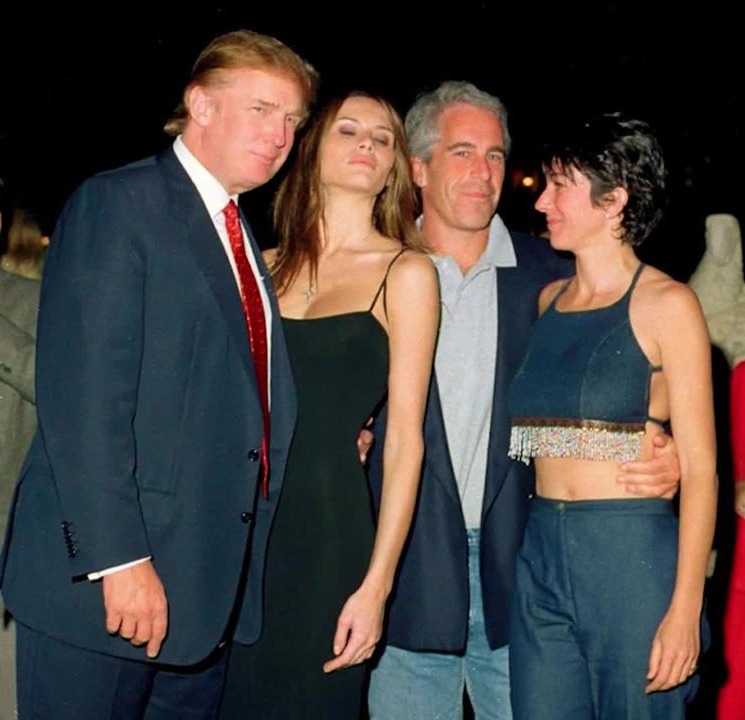
The two men were known to move in the same elite social circles in New York and Florida during the 1990s. Trump has repeatedly said he ended the relationship well before Epstein’s legal troubles became public.
A wave of resignations linked to the Epstein documents
The ongoing release of the Epstein Files has also triggered political and institutional repercussions in several countries.
In the United States, one of the most notable resignations involved Kathryn Ruemmler, former White House counsel under President Barack Obama and chief legal officer at Goldman Sachs, who stepped down following reports highlighting her past contacts with Jeffrey Epstein.
Prominent attorney Brad Karp, chairman of the New York law firm Paul Weiss, also faced intense scrutiny after emails revealed interactions with Epstein and his associates.
Former U.S. Treasury Secretary Larry Summers, whose ties to Epstein had already sparked controversy in previous years, withdrew from several academic and institutional roles amid renewed criticism.
Other American figures have faced political pressure as well, including Howard Lutnick, U.S. Secretary of Commerce, who was questioned by lawmakers following reports of past meetings with Epstein.
The fallout has not been limited to the United States.
Internationally, the controversy has contributed to the resignation of Miroslav Lajčák, national security adviser to Slovakia’s prime minister, while in the United Kingdom former cabinet minister Peter Mandelson stepped down from the House of Lords amid scrutiny over past contacts with Epstein.
In France, former culture minister Jack Lang resigned as president of the Institut du Monde Arabe after financial investigators examined links between Epstein and transactions connected to his circle.
These departures illustrate the extraordinary reach of Epstein’s network among global political, economic, and diplomatic elites—and explain why the gradual release of the archives continues to produce political shockwaves across multiple continents.
A congressional investigation into the document releases
The political controversy surrounding the Epstein documents intensified further in Washington this week.
A U.S. congressional committee voted to summon Attorney General Pam Bondi to explain the handling and publication of documents related to the Epstein case.
Lawmakers are seeking clarification on several issues, including:
- why some documents were released later than others
- whether the full archive has been made public
- and whether sensitive materials remain withheld.
Democratic lawmakers have raised concerns about potential political influence over the release of judicial records, while Republicans accuse their opponents of exploiting the Epstein case for partisan purposes.
A global scandal that continues to unfold
Jeffrey Epstein was arrested in July 2019 on charges of sex trafficking of minors.
One month later, he was found dead in his cell at a federal detention facility in New York in what authorities ruled a suicide.
His death sparked global controversy and countless questions about the powerful network of associates he had cultivated for decades.
The ongoing release of legal and investigative records has revealed the names of numerous political figures, financiers, celebrities, and members of international high society.
However, U.S. authorities have repeatedly emphasized an important point:
the mere appearance of a person’s name in Epstein-related documents does not imply criminal wrongdoing.
An investigation still surrounded by unanswered questions
Despite the millions of pages already made public, experts say the Epstein case still contains many unanswered questions.
Large portions of the documents remain heavily redacted, and several investigations linked to Epstein’s network are ongoing.
As a result, each new batch of released records continues to generate intense political debate and media scrutiny.
Seven years after Jeffrey Epstein’s death, the case remains one of the most sensitive judicial and political scandals of the 21st century, illustrating the complex intersection of sexual exploitation, power networks, and institutional accountability.