

Every year, thousands of scientific papers push the boundaries of medicine, life sciences, agriculture and tomorrow’s technologies. Yet only a handful ever make their way beyond academic journals into public awareness. The names of the researchers transforming our understanding of the human brain, genetics, cardiovascular disease or climate resilience often remain unknown, even though their discoveries are already shaping the healthcare systems, food production and medical innovations that will define the coming decades.
Five Women, Five Continents, Five Discoveries That Could Transform Our Future
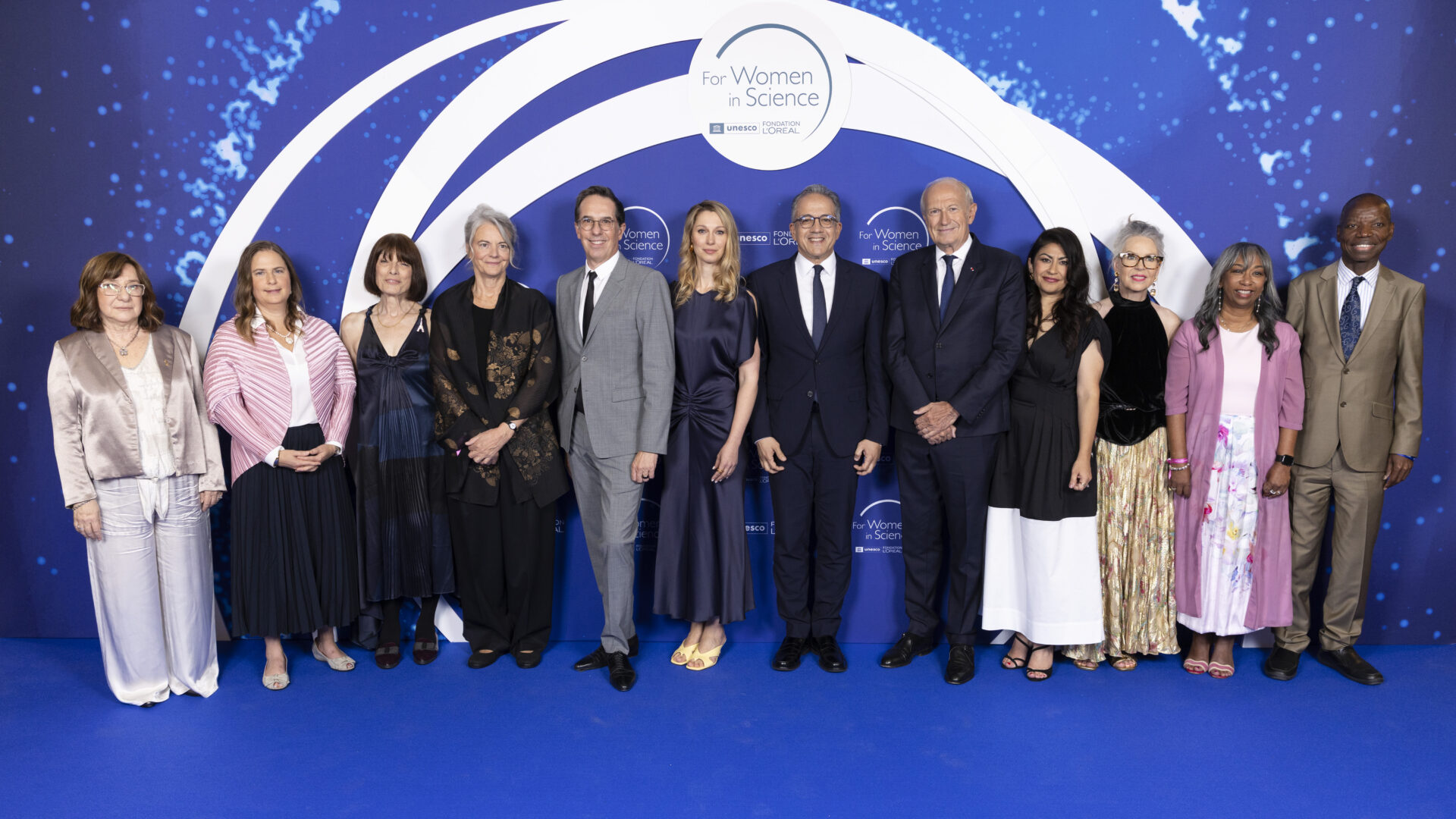
That is precisely the ambition of the L’Oréal-UNESCO For Women in Science International Awards: to bring visibility to the women who are expanding the frontiers of scientific knowledge while demonstrating that a more diverse scientific community is also a stronger and more innovative one.
For this 28th edition, five exceptional scientists from South Africa, Australia, the United Kingdom, Argentina and the United States have been recognised for research addressing some of the most pressing challenges facing humanity today. Their work ranges from improving the treatment of childhood cardiovascular disease and uncovering the links between nutrition and mental health, to mapping the human body one cell at a time, developing crops capable of surviving increasingly severe droughts, and pioneering a new era of regenerative medicine through organ-on-chip technologies.
Together, these five careers embody a vision of science that extends far beyond the production of knowledge for its own sake. Their research seeks to solve real-world problems: saving more children affected by cardiovascular disease, preventing psychiatric disorders, strengthening global food security in the face of climate change, and accelerating the development of the next generation of medical treatments. Although their disciplines differ, they share one common objective—using scientific excellence to improve the lives of millions of people.
The 2026 edition also arrives at a particularly significant moment. As several countries reduce public investment in research or question diversity initiatives, the L’Oréal Foundation and UNESCO have renewed their historic partnership for another six years. More than a symbolic commitment, this decision reflects a shared conviction: the world’s greatest scientific challenges cannot be solved without enabling every talent to contribute fully to research.
Women in Science: A Challenge That Now Extends Far Beyond Equality
For decades, advocating for women in scientific careers was primarily viewed as a matter of equal opportunity. The objective was straightforward: ensuring that girls and women could access the same education, laboratories and career prospects as their male counterparts. That battle is far from over. Yet the conversation has evolved considerably.
Today, major international organisations are advancing a different—and perhaps even more compelling—argument. Scientific excellence itself depends on diversity. A research community that leaves part of its talent behind inevitably deprives itself of new perspectives, fresh hypotheses and discoveries that might otherwise reshape entire fields.
UNESCO makes this point forcefully in the report accompanying the 2026 awards. Women still account for only around one-third of researchers worldwide, and their representation declines even further among laboratory directors, members of national academies of science and recipients of the world’s most prestigious scientific honours. Since the Nobel Prizes were first awarded in 1901, fewer than four percent of Nobel Prizes in the sciences have gone to women, while women make up only 19 percent of the membership of national science academies. These figures do not reflect a lack of ability. Rather, they reveal structural barriers that continue to accompany women scientists throughout their careers.
Those barriers take many forms. Women researchers often face greater difficulty securing funding, slower progression into leadership positions, lower visibility within their fields, persistent gender stereotypes and the continuing challenge of balancing demanding scientific careers with family responsibilities. Considered individually, each obstacle may appear manageable. Taken together, however, they help explain why women remain significantly underrepresented among the world’s most recognised scientific leaders.
For Khaled El-Enany, Director-General of UNESCO, the issue extends well beyond representation.
“Empowering women in science is not only a matter of equity; it is a prerequisite for innovation and sustainable development.”
In his view, the persistent imbalance stems less from differences in talent than from enduring stereotypes, unequal opportunities, insufficient visibility and systemic barriers that continue to limit women’s careers at every stage.
This conclusion is increasingly supported by scientific evidence itself. For decades, biomedical research relied predominantly on male populations. As a result, certain cardiovascular diseases, stroke symptoms and even drug side effects were less well understood in women, delaying diagnosis and treatment in countless cases. In other fields, the lack of diversity within research teams has influenced which scientific questions were asked, which experimental protocols were prioritised and which innovations ultimately emerged.
Promoting greater diversity is therefore about far more than correcting a historical imbalance. It is about improving the quality, relevance and impact of scientific knowledge itself.
A Science That Becomes Poorer When It Silences Women’s Voices
The President of the L’Oréal Foundation, Jean-Paul Agon, does not hide his concern about the current international landscape. In his foreword to the 2026 programme, he describes a period marked by shrinking research budgets, increasing geopolitical tensions and, in several countries, growing challenges to diversity, equity and inclusion initiatives that have helped broaden access to scientific careers over the past decades.
His assessment is unequivocal.
“A science that silences women’s voices is a science that impoverishes itself.”
The statement reflects a profound shift in the philosophy behind the For Women in Science programme. Nearly three decades after its creation, the initiative is no longer solely about recognising exceptional women scientists. It has become a platform for demonstrating that scientific progress itself depends upon the ability of research systems to identify, support and retain every available talent.
Scientific excellence, Jean-Paul Agon argues, cannot flourish if half of humanity continues to encounter greater obstacles in accessing funding, leadership positions or international recognition. Diversity is not an optional addition to scientific excellence—it is one of its driving forces.
His concerns are supported by the programme’s own history.
Since its launch in 1998, the L’Oréal-UNESCO For Women in Science programme has supported more than 5,000 women scientists across over 140 countries and territories. It has recognised 142 International Laureates, seven of whom later went on to receive the Nobel Prize, demonstrating the programme’s remarkable ability to identify pioneering researchers long before they become global scientific icons.
Among those Nobel laureates are names that have fundamentally reshaped modern science, including Emmanuelle Charpentier, Jennifer Doudna and Katalin Karikó, whose discoveries have transformed gene editing and mRNA medicine.
These achievements illustrate something essential: investing in women scientists is not simply about recognising careers that already exist. It is about accelerating discoveries that may ultimately benefit millions of people worldwide.
Yet statistics tell only part of the story.
Behind every award lies years—sometimes decades—of persistence, uncertainty, difficult career decisions and personal sacrifices. Several of the 2026 laureates describe having interrupted their careers, moved across continents, rebuilt research programmes from scratch or navigated scientific environments where women were still expected to prove themselves more than their male colleagues.
Those personal journeys add another dimension to their scientific achievements. They remind us that every major discovery is also a profoundly human story.
From Laboratory Discoveries to Public Health Policies
Although the five laureates work in remarkably different disciplines, their research shares one defining characteristic.
None of them conducts science solely for the sake of scientific knowledge.
Each has deliberately sought to transform fundamental discoveries into practical applications capable of improving healthcare, strengthening public health systems, protecting vulnerable populations or helping societies adapt to climate change.
This ability to bridge basic research, clinical medicine, public policy and industrial innovation explains why their work extends far beyond universities and research institutes.
Their discoveries are already influencing governments, international organisations, physicians, biotechnology companies and healthcare systems across the globe.
Professor Liesl Zühlke: Fighting One of the World’s Most Neglected Heart Diseases
For millions of children living in low-income countries, a simple untreated throat infection can eventually lead to irreversible heart damage. This devastating condition, known as rheumatic heart disease, has become the focus of Professor Liesl Zühlke’s career. The South African cardiologist receives the 2026 L’Oréal-UNESCO For Women in Science International Award for research that has transformed the prevention, diagnosis and treatment of a disease that continues to affect some of the world’s most vulnerable populations.
Professor Zühlke demonstrated that rheumatic heart disease is far more than a medical condition. It is closely linked to poverty, limited access to healthcare and delayed diagnosis. Her work has helped shift international attention towards prevention and early screening while influencing discussions within the World Health Organization and national health policies. She has also contributed to research aimed at developing a Group A Streptococcus vaccine, offering hope that future generations could be protected from a disease that remains largely preventable.
Growing up in South Africa during apartheid profoundly shaped her commitment to health equity. Inspired by pioneers such as Marie Curie and Christiaan Barnard, she pursued cardiology with the conviction that scientific research should improve people’s lives. Today, alongside her internationally recognised cardiovascular research, she mentors young African scientists and advocates for greater investment in healthcare research across the continent.
“I hope our findings will improve the lives of children living with heart disease and ensure earlier diagnosis and better care worldwide.”
Professor Felice Jacka: The Scientist Who Revolutionised Mental Health Through Nutrition
For decades, psychiatry focused primarily on genetics, psychology and medication. Professor Felice Jacka challenged that approach by asking a question that has since transformed medical research: can nutrition influence mental health? Her pioneering work established the field of nutritional psychiatry, earning her the 2026 L’Oréal-UNESCO For Women in Science International Award.
As Director of the Food & Mood Centre at Deakin University, Professor Jacka demonstrated that diet plays a fundamental role in brain function and mental wellbeing. Her research has shown that healthy eating patterns are associated with lower risks of depression and anxiety while opening new perspectives on the relationship between nutrition, inflammation, the gut microbiome and the brain. What was once viewed as a controversial hypothesis has become one of the fastest-growing fields in neuroscience and psychiatry.
Beyond the laboratory, Professor Jacka has worked extensively with clinicians, governments and international organisations to ensure that scientific evidence translates into public health policies. Her work is helping redefine mental healthcare by placing prevention alongside treatment.
“Scientific evidence achieves its greatest impact when it improves people’s health and everyday lives.”
Professor Sarah A. Teichmann: Mapping Every Cell in the Human Body
Understanding the human genome transformed biology. Understanding every individual human cell may transform medicine. That is the ambition driving Professor Sarah A. Teichmann, one of the world’s leading experts in single-cell genomics and recipient of the 2026 L’Oréal-UNESCO For Women in Science International Award.
Professor Teichmann’s research enables scientists to analyse cells individually rather than collectively, revealing biological mechanisms that were previously impossible to observe. Her discoveries are accelerating progress in precision medicine, cancer research, immunology and rare diseases while supporting the internationally renowned Human Cell Atlas, an ambitious project to map every cell in the human body. These advances are expected to transform disease diagnosis, drug discovery and personalised medicine over the coming decades.
An advocate for interdisciplinary science, she has also helped bridge biology, genomics, artificial intelligence and computational science. Her commitment to open science and scientific collaboration has made her a leading voice for the next generation of biomedical researchers.
“Understanding biology at the level of individual cells opens entirely new possibilities for diagnosing and treating disease.”
Professor Raquel Lia Chan: Developing Climate-Resilient Crops for the Future
As climate change intensifies droughts across the globe, agriculture faces one of its greatest challenges: producing enough food while using fewer natural resources. Professor Raquel Lia Chan has devoted her career to finding scientific solutions to that challenge, earning the 2026 L’Oréal-UNESCO For Women in Science International Award for her groundbreaking work in plant biotechnology.
Working in Argentina, Professor Chan identified genetic mechanisms that enable crops to better withstand prolonged drought. Her discoveries have contributed to the development of more resilient varieties of soybean, wheat, maize and rice, helping agriculture adapt to increasingly unpredictable climate conditions. By transforming fundamental plant biology into practical agricultural innovation, her research directly supports food security and sustainable farming.
Alongside her scientific achievements, she has trained generations of researchers throughout Latin America, promoting collaboration and innovation across the region.
“Science gives us the tools to help agriculture adapt to climate change while protecting future food production.”
Professor Gordana Vunjak-Novakovic: Engineering the Future of Regenerative Medicine
Few scientific fields are evolving as rapidly as regenerative medicine, and few researchers have contributed more to its development than Professor Gordana Vunjak-Novakovic, recipient of the 2026 L’Oréal-UNESCO For Women in Science International Award.
A professor at Columbia University, Professor Vunjak-Novakovic has pioneered tissue engineering and organ-on-chip technologies, developing miniature biological systems that reproduce the behaviour of human organs. These innovations are transforming pharmaceutical research by improving drug testing and reducing reliance on animal models while opening new possibilities for personalised medicine and tissue regeneration.
Her work also lays the foundation for future therapies capable of repairing damaged organs and restoring biological function, demonstrating how engineering and medicine are increasingly working together to redefine healthcare.
“The future of medicine depends on our ability to recreate the complexity of human tissues and better understand how diseases develop.”
Five Scientists, One Vision for the Future of Research
The 2026 L’Oréal-UNESCO For Women in Science International Awards highlight more than five exceptional careers. Together, the laureates represent the scientific priorities that will shape the coming decades: improving cardiovascular health, advancing mental health research, accelerating precision medicine, strengthening food security and transforming regenerative medicine.
Their work also reflects a broader shift in global science. The most significant breakthroughs increasingly emerge where disciplines intersect—where biology meets artificial intelligence, engineering collaborates with medicine, and plant science contributes to climate resilience. Innovation is becoming more collaborative, more international and more focused on solving society’s most pressing challenges.
By recognising Professor Liesl Zühlke, Professor Felice Jacka, Professor Sarah A. Teichmann, Professor Raquel Lia Chan and Professor Gordana Vunjak-Novakovic, the L’Oréal Foundation and UNESCO are not only celebrating scientific excellence. They are highlighting research that is already influencing healthcare, agriculture and biotechnology while encouraging more women to pursue careers in science. Nearly three decades after the programme was launched, its mission remains clear: supporting scientific talent wherever it exists and ensuring that the discoveries shaping tomorrow’s world reflect the diversity of the societies they are intended to serve.