
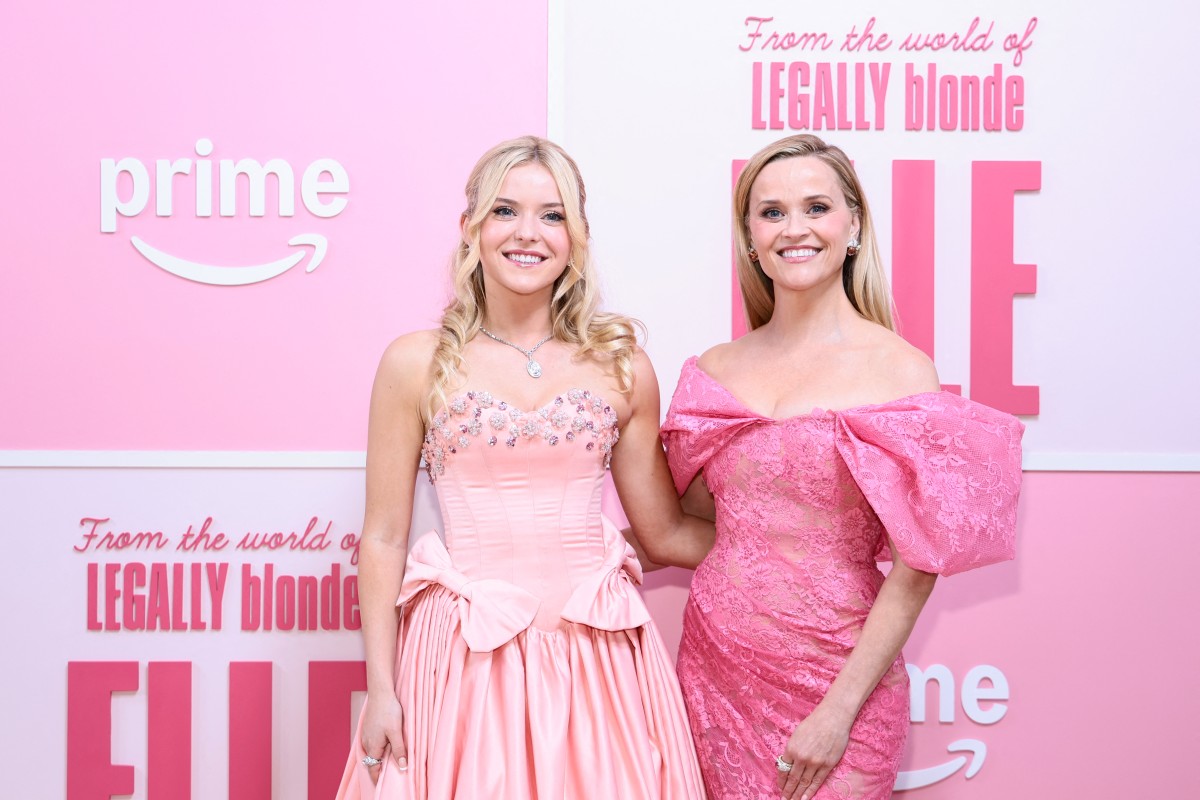


Twenty-five years after redefining the portrayal of women in Hollywood comedies, Legally Blonde is making its highly anticipated return—this time as a television series on Prime Video. But behind Elle, the franchise’s new prequel, Reese Witherspoon is doing far more than bringing back one of cinema’s most beloved characters. Now one of Hollywood’s most influential producers, she is carefully handing the legacy of Elle Woods to a new actress while continuing to build the media empire that has made her one of the entertainment industry’s most powerful women.
Legally Blonde: How Reese Witherspoon Turned a Cult Classic into a Multi-Generational Franchise ?
Few female movie characters continue to resonate more than two decades after their big-screen debut. While many heroines of the early 2000s have become nostalgic pop culture references, Elle Woods remains remarkably relevant. Her optimism, intelligence, humor, and unwavering confidence continue to captivate audiences, proving that great female characters can transcend generations.
Prime Video is betting precisely on that enduring appeal with Elle, a prequel series that explores the teenage years of Elle Woods long before she became the unforgettable Harvard Law student audiences first met in the 2001 film. Rather than recreating Legally Blonde, the series explores the experiences that shaped one of modern cinema’s most iconic female protagonists.
Although Reese Witherspoon will not reprise the role on screen, she remains the driving force behind the project. As executive producer, founder of Hello Sunshine, and the creative force behind the series, she is personally overseeing every step of Elle Woods’ return. Her involvement perfectly illustrates the evolution of her own career—from acclaimed actress to entrepreneur capable of transforming a successful film into a valuable intellectual property that continues to grow decades later.
In today’s Hollywood, that strategy has become essential. Major studios no longer focus solely on producing successful films; they seek to build storytelling universes capable of surviving across generations. Once reserved primarily for superheroes and science-fiction franchises, that business model now extends to female-led stories. With Elle, Reese Witherspoon demonstrates that a character created at the beginning of the 21st century can still engage new audiences while preserving the values that made her successful in the first place.
The return of Legally Blonde also arrives at a time when the representation of women on screen has become one of the industry’s defining conversations. Debates surrounding gender equality in Hollywood, the gender pay gap, female leadership behind the camera, and the diversity of women’s roles have fundamentally reshaped film and television over the past decade.
Within that context, Elle Woods now appears almost visionary. Long before Hollywood began celebrating “strong female characters,” she embodied ambition, intelligence, kindness, and resilience without ever sacrificing her femininity. She challenged stereotypes not by rejecting them, but by proving they were fundamentally flawed.
That is precisely why Elle Woods continues to be referenced in academic discussions about gender representation and popular culture. More than twenty years later, she remains one of the rare female characters whose influence extends far beyond entertainment.
How Legally Blonde Became Much More Than a Romantic Comedy ?
When Legally Blonde premiered in July 2001, few industry observers predicted that Amanda Brown’s novel adaptation would become one of the defining films of its generation. At first glance, the marketing campaign suggested a conventional romantic comedy: a fashionable blonde woman follows her ex-boyfriend to Harvard Law School in an attempt to win him back.
Initially, the story appears to reinforce familiar stereotypes by contrasting appearance with intelligence. To everyone around her, Elle Woods embodies the cliché of the superficial blonde that Hollywood had recycled for decades. As president of her sorority, dressed almost exclusively in pink and deeply passionate about fashion and beauty, she seems to represent everything a prestigious law school supposedly rejects.
Yet the film quickly subverts those expectations.
Instead of abandoning her personality to fit into an elite academic environment, Elle chooses to remain unapologetically herself. She refuses to hide her femininity, her optimism, or her sense of style. Rather than becoming obstacles, those qualities gradually become her greatest strengths.
That narrative reversal remains one of Legally Blonde’s greatest achievements. For decades, ambitious female characters were often expected to suppress part of their identity in order to be accepted within male-dominated institutions. Elle Woods follows a radically different path. She earns respect not because she changes who she is, but because her intelligence and determination eventually force others to confront their own prejudices.
In doing so, Legally Blonde challenged one of Hollywood’s oldest assumptions—that femininity and intellectual excellence could not coexist.
The film became an immediate commercial success. Produced on an estimated $18 million budget, it grossed more than $140 million worldwide, turning Reese Witherspoon into one of Hollywood’s most sought-after actresses.
Its cultural impact quickly expanded far beyond cinema. A sequel followed in 2003, a successful Broadway musical introduced the story to new audiences, international adaptations were developed, and Elle Woods’ wardrobe, quotes, and unmistakable aesthetic became enduring elements of popular culture.
More than twenty-five years later, that extraordinary longevity explains why Elle exists. Rather than revisiting an adult Elle Woods, Reese Witherspoon chose to explore the origins of the character herself, revealing how a teenager who constantly faced judgment because of her appearance gradually learned to transform prejudice into confidence—and confidence into success.
Why Prime Video’s Elle Explores Elle Woods’ Teenage Years ?
Choosing to tell Elle Woods’ story before Harvard is far more than a nostalgic creative decision. It reflects one of Hollywood’s biggest storytelling trends: revisiting iconic characters through origin stories that reveal how they became the people audiences already know and love.
With Elle, Prime Video isn’t remaking Legally Blonde. Instead, the series expands one of the franchise’s most beloved characters by exploring the experiences that shaped Elle Woods years before she walked through the doors of Harvard Law School. The prequel offers fans the opportunity to discover the events that forged her confidence, resilience, and unwavering optimism, while introducing the Legally Blonde universe to a new generation of viewers.
Set in 1995, several years before the events of the original film, Elle follows sixteen-year-old Elle Woods after her family’s unexpected move from sunny California to Seattle following a scandal involving her father. Overnight, the confident teenager loses everything that once defined her world—her friends, her social circle, and the familiar environment where she felt completely at home.
Arriving in Seattle means entering a culture that couldn’t be more different. At the height of the grunge movement, the city embraces darker aesthetics and a more cynical outlook, making Elle’s vibrant personality, colorful wardrobe, and relentless optimism stand out even more. As she struggles to fit into her new high school, she quickly becomes the target of stereotypes and snap judgments based solely on her appearance.
That premise echoes the central theme that made Legally Blonde a cultural phenomenon. Long before anyone recognizes her intelligence, determination, or talent, Elle Woods is underestimated simply because she enjoys fashion, wears pink, and refuses to apologize for her femininity. Rather than changing herself to earn acceptance, she gradually learns to transform prejudice into motivation—a lesson that will ultimately define the woman audiences meet years later at Harvard Law School.
Instead of retelling a familiar story, Elle expands the Legally Blonde universe by showing that confidence is not an innate personality trait but something built through resilience, setbacks, and perseverance. It offers a deeper understanding of one of modern cinema’s most beloved female characters while preserving the optimism and humor that made the original film such a lasting success.
More Than a Legally Blonde Reboot, Elle Is the Beginning of a New Chapter
Prime Video’s Elle is therefore much more than another Hollywood reboot designed to capitalize on nostalgia. The series expands one of the most successful female-led franchises of the past quarter century while introducing its central character to audiences who may never have seen the original film.
For Prime Video, Elle represents an opportunity to revive the Legally Blonde franchise for a new generation of viewers. For Reese Witherspoon, however, the project carries a deeper significance. As executive producer, she is not simply revisiting the role that made her an international star; she is carefully protecting the legacy of a character who helped redefine how ambitious women could be portrayed on screen.
By personally selecting Lexi Minetree to play the young Elle Woods, Reese Witherspoon has embraced a rare approach in Hollywood: passing an iconic role to a new actress while remaining actively involved in shaping its future. Rather than replacing the original character, Elle expands her story and ensures that her message continues to evolve.
Twenty-five years after Legally Blonde first challenged Hollywood’s stereotypes about beauty, intelligence, and female ambition, Elle reminds audiences why the character remains so relevant. Elle Woods did not become an icon because she wore pink or attended Harvard Law School. She became an icon because she proved that women should never have to choose between being taken seriously and remaining unapologetically themselves.
That message remains just as powerful today as it was in 2001—and it is precisely why Elle has the potential to introduce one of Hollywood’s most enduring female characters to an entirely new generation.