

World Press Freedom Day, observed every May 3, is meant to reaffirm the essential role of independent journalism in democratic societies. Yet the ability to report freely is not experienced equally.
For women journalists, the working environment has measurably deteriorated. Online violence—now more frequent, more organized, and increasingly powered by artificial intelligence—is reshaping how, and whether, women participate in public discourse.
Press freedom under unequal conditions
A 2026 UN Women report, Tipping Point: Online Violence Impacts, Manifestations and Redress in the AI Age, provides updated global data based on a survey of 641 women across 119 countries .
The findings point to a normalization of abuse that was once considered fringe.
Online violence is scaling — and evolving
Twelve percent of respondents report the non-consensual sharing of personal images, including intimate content. Six percent have been targeted by deepfakes or manipulated media, while 27 percent report receiving unsolicited sexual content or advances in private messages .
What is new is the scale and speed enabled by technology. AI-powered tools can now generate sexualized or fabricated images of women within seconds. One app alone reportedly produced more than three million “nudified” images by early 2026, at a rate of thousands per hour .
This is not simply harassment at scale—it is a structural shift in how abuse is produced and distributed.
Measurable mental health and professional impacts
The consequences extend beyond reputational harm. Nearly one in four women surveyed (24.4 percent) report being diagnosed with or treated for anxiety or depression linked to online violence. An additional 12.8 percent report symptoms consistent with post-traumatic stress disorder .
For journalists, these impacts translate into professional constraints. Exposure to repeated attacks influences editorial decisions, limits topic selection, and in some cases leads to withdrawal from public-facing roles.
Self-censorship is rising sharply
One of the most significant findings concerns self-censorship.
Forty-one percent of women surveyed say they now limit what they post on social media to avoid abuse. Nineteen percent report similar behavior in their workplace .
Among women journalists, the trend is even more pronounced. The rate of self-censorship has increased from 30 percent in 2020 to 45 percent in 2025—a 50 percent rise in just five years .
This is not a marginal shift. It directly affects what information is produced, published, and amplified.
More reporting, limited accountability
There is evidence of increased reporting. One in four women say they have reported incidents of online violence to the police, and 15 percent have pursued legal action .
However, outcomes remain limited. Only 10 percent of cases lead to charges. Over a quarter of respondents report reluctance or refusal from law enforcement to investigate, and 24 percent describe responses they perceived as victim-blaming .
The gap between rising incidents and weak enforcement highlights a structural issue: legal frameworks and institutions are not keeping pace with the evolution of digital violence.
A press freedom issue, not just a safety issue
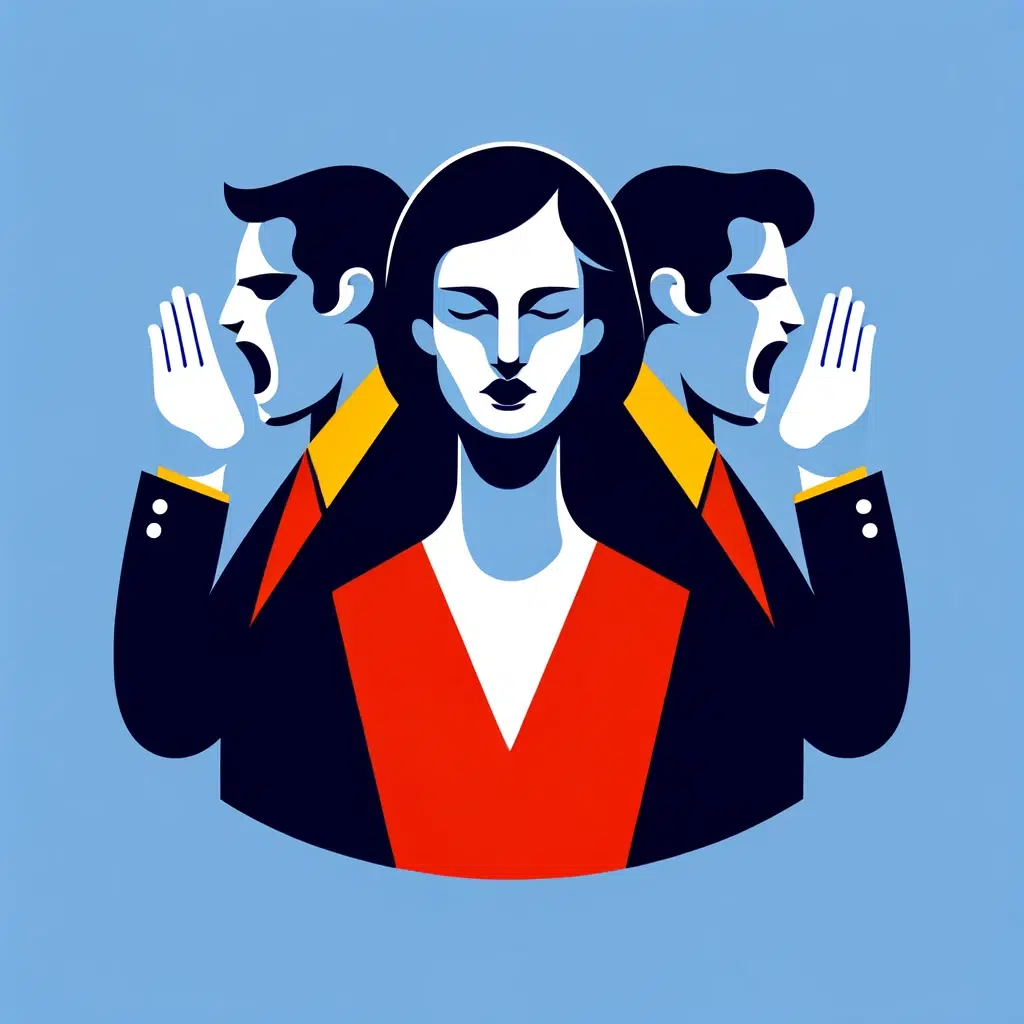
The report underscores that these attacks are not random. They are often deliberate, coordinated, and aimed at undermining credibility, isolating targets, and ultimately reducing women’s participation in public life .
This has direct implications for press freedom.
If a significant proportion of journalists are modifying their behavior, avoiding certain topics, or stepping back from public engagement, the diversity and quality of information available to the public is affected.
Press freedom, in this context, is no longer only about legal protections or state censorship. It is also about whether journalists—particularly women—can operate without sustained, targeted pressure.
Key takeaways
The data confirms a sustained increase in online violence targeting women journalists, with new forms linked to artificial intelligence. These attacks are producing measurable effects on mental health, professional practices, and editorial choices, notably through rising self-censorship. While reporting rates are increasing, accountability remains limited, raising broader questions about the resilience of press freedom in a digital environment.