

Donald Trump claims that the United States will now “run” Venezuela following the capture of President Nicolas Maduro during a highly controversial US military operation. Behind the rhetoric of control, however, a far more complex reality is emerging: with no known US military presence on the ground, Washington appears to be relying on existing institutions — and above all on a central figure of the Chavista system: Delcy Rodríguez.
Governing without troops or administration
Since the intervention, Donald Trump has repeatedly stated that the United States intends to temporarily “direct” the South American country of 30 million people, whose economy has been devastated by years of crisis. Yet no concrete governing structure has been announced: the US embassy in Caracas remains closed, no transitional authority has been put in place, and no American administration is operating on the ground.
Even the 2003 invasion of Iraq, which drew heavy international criticism, was preceded by extensive planning and the establishment of a provisional governing authority. In Venezuela’s case, Washington’s ambition appears to be political control without formal occupation.
Delcy Rodríguez, a central figure of power
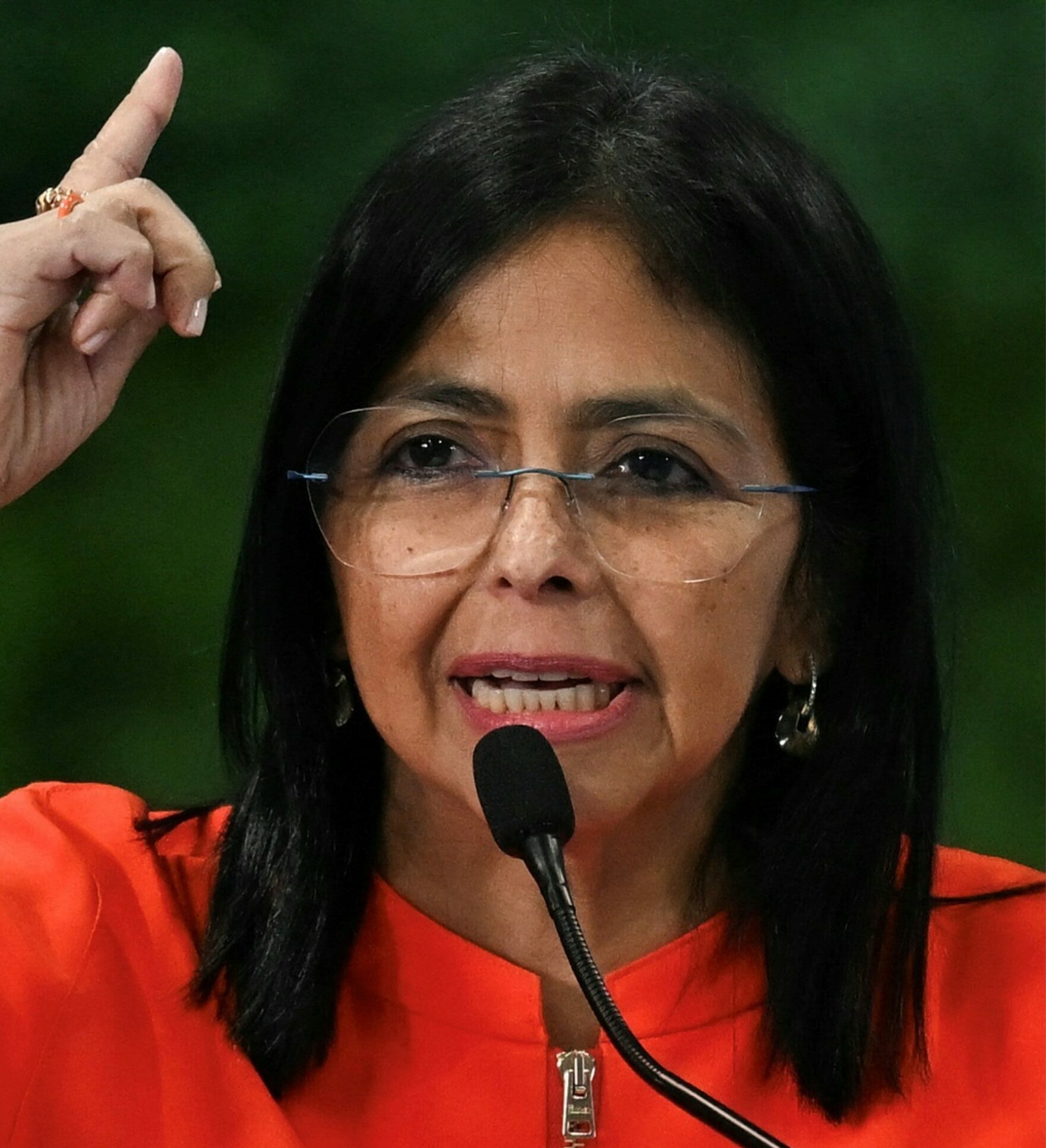
Into this institutional vacuum steps Delcy Rodriguez, the former vice president under Maduro, who was sworn in on Monday as interim president by Venezuela’s institutions. Her appointment is pivotal. Donald Trump has stated that Washington is now “working with her,” while simultaneously warning that she could face a “worse fate” if she fails to comply with US demands — particularly regarding American access to Venezuela’s vast oil reserves.
Delcy Rodríguez is no marginal actor. A trained lawyer and former foreign minister, she has been one of the most powerful and visible figures of Chavismo for over a decade, known for her sharp rhetoric and her ability to negotiate under pressure.
A shifting discourse
On Saturday, Rodríguez struck a defiant tone, declaring Nicolás Maduro the country’s “only legitimate president” and asserting that Venezuela was ready to “defend itself.” Within 24 hours, her language softened. By Sunday, she was speaking of a possible “agenda of cooperation” with Washington.
This rhetorical shift illustrates a delicate balancing act. “She must express outrage at the intervention while remaining open to promoting pro-American policies that will be extremely difficult for her regime to accept,” explains Ryan Berg of the Center for Strategic and International Studies in Washington. After 27 years of portraying the United States as the country’s sworn enemy, such a pivot carries significant internal risks.
Trump sidelines the opposition
In parallel, Donald Trump has publicly distanced himself from Maria Corina Machado, a leading opposition figure and recent Nobel Peace Prize laureate. He dismissed her as lacking sufficient domestic support.
According to political scientist Mark Jones of Rice University, installing Machado in the presidential palace would have required a large-scale US military presence — a scenario that would have been both politically costly for Trump, who campaigned on non-intervention, and highly unstable on the ground.
Cooperation under constraint
US Secretary of State Marco Rubio clarified Washington’s position on NBC: “This is not about governing — it’s about controlling policy.” The statement sheds light on the role envisioned for Rodríguez: governing Venezuela while aligning key decisions with US strategic interests.
Although sanctioned by the United States and the European Union for years, Delcy Rodríguez has reportedly been in contact with Washington well before the military operation. Former US diplomat Brian Naranjo cautions that she is unlikely to act as a mere puppet, instead using cooperation to buy time and consolidate her position internally.
A volatile equation for Chavismo
To effectively shape Venezuela’s trajectory, Washington will also need the cooperation of other regime pillars, notably Defense Minister Vladimir Padrino López, who controls the armed forces. Some US demands — such as cooperation on drug trafficking — may be negotiable. Others, including a potential break with Cuba, strike at the ideological core of the Bolivarian project shaped by Hugo Chavez.
“The idea of Venezuela becoming a US vassal state runs directly counter to the Bolivarian revolution,” notes a regional specialist.
Caught between external pressure and internal loyalties, Delcy Rodríguez now stands at the center of a high-risk geopolitical gamble, embodying both the continuity of the Chavista system and its growing fragility.