
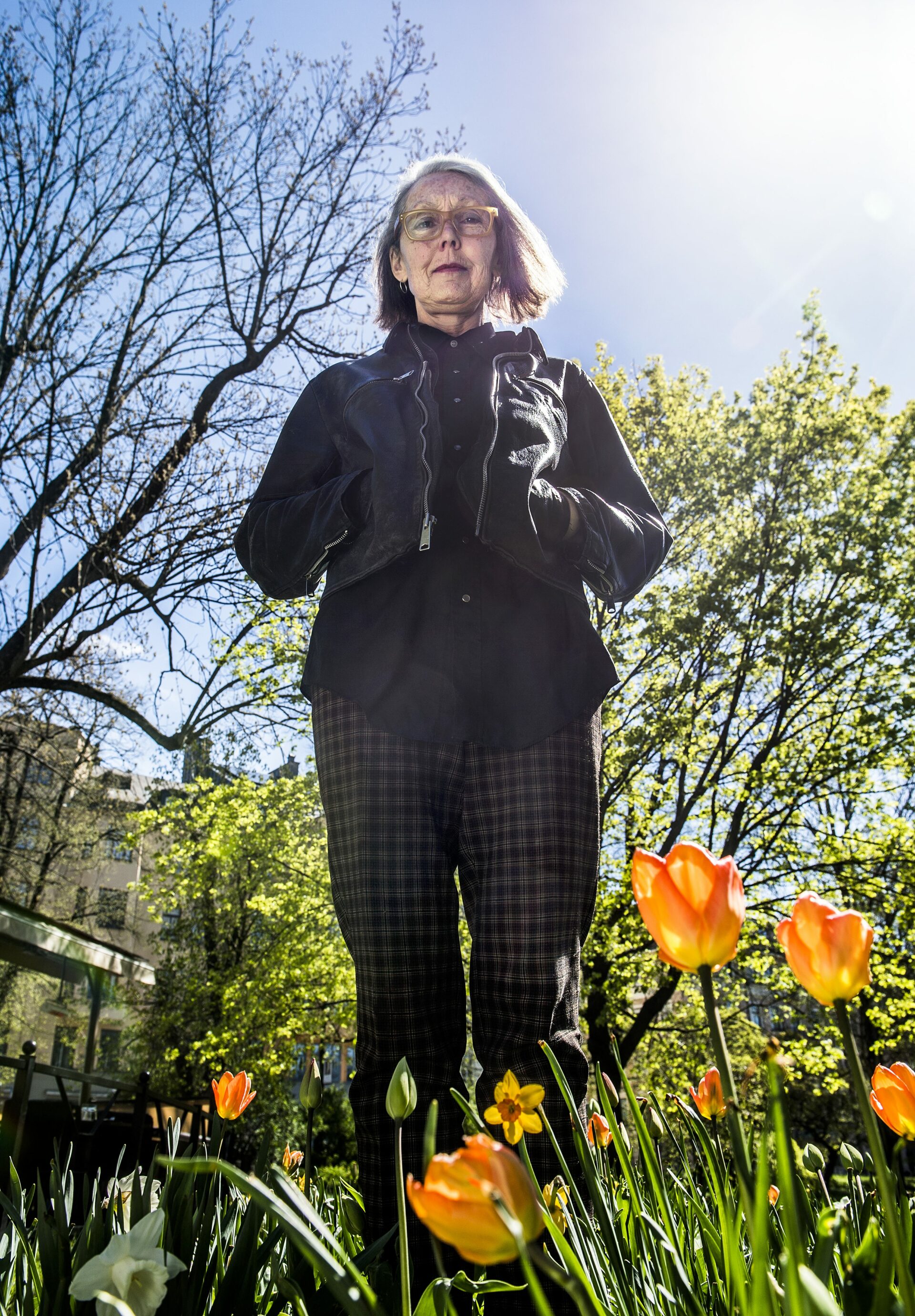


Canadian poet Anne Carson has been named the winner of the 2026 Nobel Prize in Literature, becoming the 19th woman to receive the prestigious award since its establishment in 1901.
A celebrated figure in contemporary English-language literature, Carson has spent four decades challenging conventional literary categories. Her books move between poetry, essays, drama, translation, and autobiography, bringing together classical Greek authors and modern cultural figures, from Virginia Woolf to Catherine Deneuve.
Although widely admired by writers, scholars, and literary critics, Carson remains less familiar to mainstream audiences. Her Nobel recognition brings renewed attention to one of the most inventive voices in contemporary literature.
Who Is Anne Carson? From Toronto to Princeton and the University of Michigan
Born in Toronto on June 21, 1950, Anne Carson developed an interest in ancient Greek while still in high school. A Latin teacher introduced her to the language during lunch breaks, beginning a lifelong intellectual fascination.
Her academic journey was unconventional. After twice leaving the University of Toronto, she eventually completed a doctorate in classical studies in 1981. She went on to teach at several prominent institutions, including McGill University, Princeton University, and the University of Michigan.
Her scholarly background became central to her literary identity. Rather than treating ancient texts as historical artifacts, Carson approaches them as living works capable of illuminating contemporary emotions, relationships, and conflicts.
Her first book, Eros the Bittersweet: An Essay (1986), established this distinctive approach. Drawing on ancient Greek literature, Carson examines the paradoxes of romantic desire, exploring how love can simultaneously produce pleasure, longing, and suffering.
Why Is Anne Carson Compared to Sappho?
Carson’s association with Sappho reflects both her literary interests and her groundbreaking work translating the ancient Greek poet.
Sappho, who lived on the island of Lesbos around the seventh and sixth centuries BCE, remains one of the few female poets of antiquity whose writings have survived, largely in fragments. Her poetry explores love, longing, jealousy, and desire, including relationships between women.
In 2002, Carson published If Not, Winter: Fragments of Sappho, a translation that preserves the gaps and missing passages of the surviving manuscripts.
Rather than attempting to reconstruct what has been lost, Carson allows silence and absence to become part of the reading experience.
Her approach raises a larger question about literary history: whose voices survive, and how much of women’s writing has disappeared over the centuries?
By translating Sappho without erasing the fragmented nature of her work, Carson allows a female voice from more than 2,500 years ago to speak to contemporary readers.
Love, Power, and Female Independence in Anne Carson’s Writing
Throughout her career, Carson has reimagined ancient myths to examine modern relationships, identity, emotional vulnerability, and the exercise of power.
In Autobiography of Red (1998), one of her best-known books, she transforms Geryon, a monster from Greek mythology, into a sensitive young protagonist navigating love, heartbreak, and self-discovery.
Written as a novel in verse, the book became a landmark of experimental contemporary poetry.
In The Beauty of the Husband: A Fictional Essay in 29 Tangos (2001), Carson explores a woman’s complicated attachment to her unfaithful husband. Structured around 29 tangos, the book examines betrayal, romantic obsession, and the emotional contradictions of marriage.
The collection earned Carson the prestigious T. S. Eliot Prize, making her the first woman to win the award.
Questions of female resistance and political authority also appear in Antigonick (2012), Carson’s experimental adaptation of Sophocles’ Antigone.
The ancient tragedy follows a young woman who defies political authority in order to honor her convictions and family obligations. Carson’s interpretation revisits enduring tensions between individual conscience, institutional power, and personal freedom.
Virginia Woolf, Catherine Deneuve, and the Art of Breaking Literary Rules
One of Carson’s defining qualities is her ability to bring seemingly unrelated figures, historical periods, and literary traditions into the same work.
Her 2000 collection Men in the Off Hours features references to Virginia Woolf, ancient Greek historian Thucydides, and French actress Catherine Deneuve.
Combining poetry, prose, historical reflection, and elements of contemporary culture, the collection won the Griffin Poetry Prize and helped establish Carson’s international reputation.
Her work has also earned admiration from influential literary figures, including Susan Sontag, Harold Bloom, and fellow Canadian writer Michael Ondaatje.
In 2020, Carson received Spain’s Princess of Asturias Award for Literature, recognizing the originality and intellectual depth of her writing.
Her more recent collection, Wrong Norma (2024), was named a finalist for the National Book Award in the United States.
Parkinson’s Disease, Grief, and the Fragility of Memory
Carson, who also holds Icelandic citizenship, has publicly disclosed that she is living with Parkinson’s disease.
Themes of loss, memory, and human vulnerability have long occupied a central place in her work. In Nox (2010), she created an unconventional literary memorial to her deceased brother, combining photographs, personal recollections, fragments of writing, and reflections on a poem by the Roman poet Catullus.
Presented in an unusual accordion-fold format, the book challenges traditional notions of what a literary work can look like. It also reveals Carson’s enduring interest in the limits of language, particularly when confronting grief and the impossibility of fully recovering the past.
For Carson, literature becomes a way of preserving traces of people, experiences, and voices that might otherwise disappear.
How Anne Carson Gives Ancient Women’s Voices New Life ?
Carson’s literary achievement extends beyond her innovative use of language and genre. Her writing repeatedly returns to women from classical antiquity, reconsidering their desires, decisions, and relationships with authority.
Through Sappho, she explores the survival of women’s artistic expression. Through Antigone, she revisits the conflict between female agency and political power.
These ancient figures become part of contemporary conversations about freedom, identity, and the ways women have been represented throughout literary history.
Her work also challenges the boundaries separating scholarship from creative writing, demonstrating how classical literature can continue to generate new forms of expression.
Anne Carson’s Nobel Prize recognizes a writer who has spent more than four decades proving that the voices of antiquity still have the power to reshape contemporary literature—and that women’s words, even when preserved only in fragments, can resonate across thousands of years.