
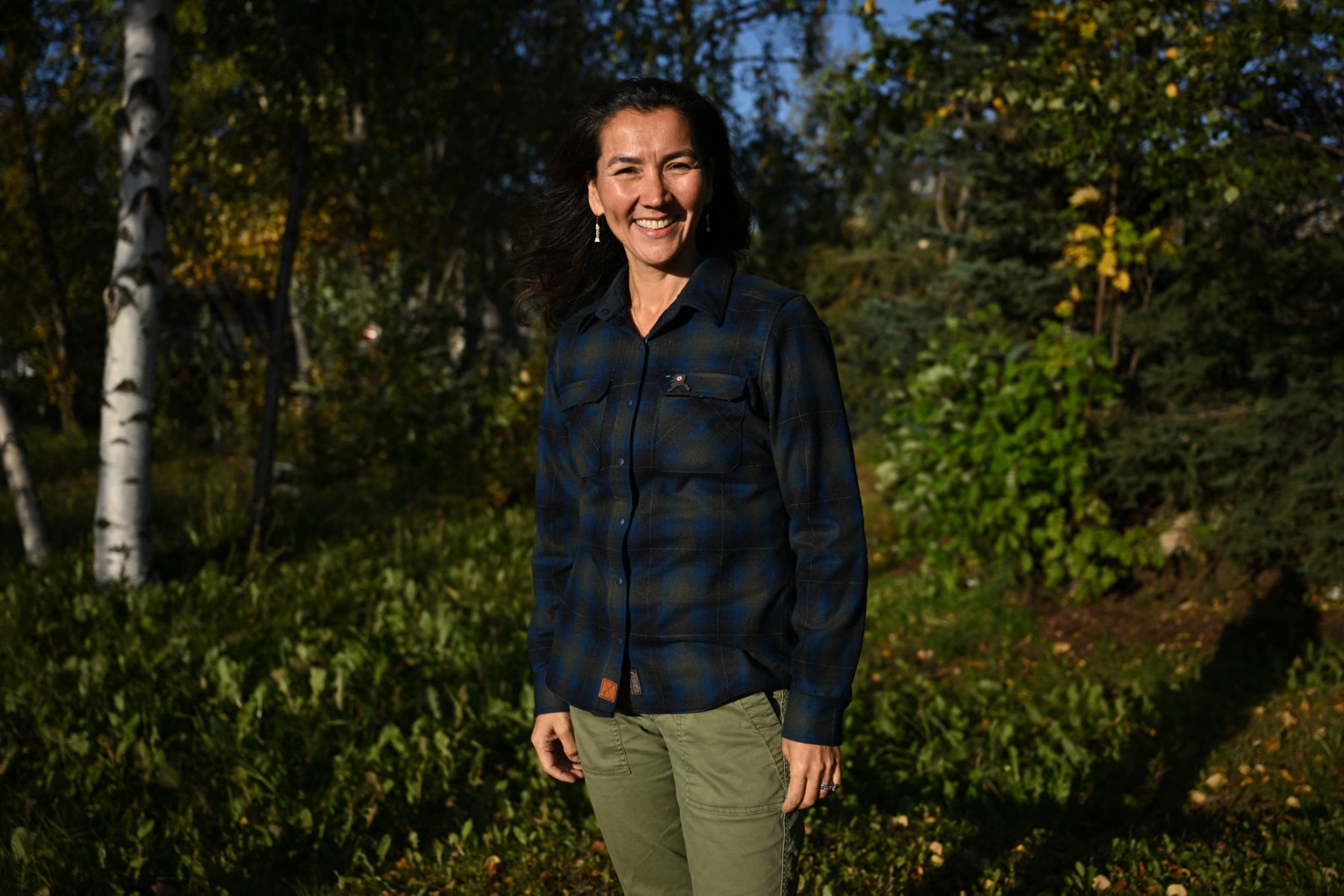


As Americans head to the polls on November 3, 2026, Democrat Mary Peltola could make history as the first Native American woman to serve in the U.S. Senate. But her closely contested race against Republican incumbent Dan Sullivan has become embroiled in allegations of electoral manipulation, a controversy involving two candidates with nearly identical names and an extraordinary legal challenge from President Donald Trump’s administration. Beyond the political turmoil, Peltola’s candidacy highlights the underrepresentation of Indigenous women in American politics and the crisis of missing and murdered Native women in Alaska.
Alaska has emerged as one of the most consequential battlegrounds of the 2026 midterm elections. A state that has traditionally favored Republicans could elect a Democratic senator, potentially helping determine which party controls the upper chamber of Congress.
At the center of the contest is Mary Peltola, a Yup’ik Democrat whose political career has already broken barriers. In 2022, she became the first Alaska Native elected to the U.S. House of Representatives. Four years later, she is attempting another historic breakthrough.
Yet the final days of her Senate campaign have been dominated by allegations that Democratic operatives recruited a candidate sharing the Republican incumbent’s name to confuse voters and weaken his chances of reelection.
The controversy has prompted investigations, a federal lawsuit and renewed questions about the Trump administration’s willingness to challenge election results before votes have even been fully counted.
Who Is Mary Peltola, the Alaska Native Democrat Seeking to Make History?
Born in Anchorage in 1973 and raised in western Alaska, Mary Peltola belongs to the Yup’ik Indigenous community. Her upbringing was shaped by fishing, subsistence traditions and the economic realities of rural Alaska.
She has frequently described fishing for salmon with her father from an early age, an experience that would later influence her political priorities.
Peltola began her legislative career in the Alaska House of Representatives, where she served from 1999 to 2009. She subsequently worked on fisheries policy and represented Indigenous interests before winning Alaska’s sole congressional seat in a 2022 special election following the death of longtime Republican Representative Don Young.
Her victory was historic. She became the first Alaska Native elected to Congress and the first Democrat to represent Alaska in the House in nearly five decades.
Her time in Washington was also marked by personal tragedy. In September 2023, her husband, Eugene Peltola Jr., died in a plane crash. She also lost her mother within months of that tragedy.
After losing her House seat to Republican Nick Begich in 2024, Peltola is now challenging Senator Dan Sullivan, who has represented Alaska in the Senate since 2015. If elected, she would become the first Native American woman to serve in the U.S. Senate.
That distinction carries particular weight in Alaska, where Indigenous peoples account for roughly one-fifth of the population but remain underrepresented in positions of federal political power.
Peltola’s candidacy also challenges assumptions about Democratic politics. She supports oil and gas development, emphasizes economic independence and has repeatedly presented herself as an Alaskan first, rather than a conventional national party figure.
Two Dan Sullivans on the Ballot: The Alleged Election Manipulation Scheme
The controversy surrounding Alaska’s Senate race centers on an unusual electoral coincidence: two candidates named Sullivan are competing in the same election.
The Republican incumbent appears on the ballot as Dan S. Sullivan, identified as the sitting Republican senator.
Another candidate, retired teacher Daniel J. Sullivan Jr., also qualified for the general election. He appears without a party affiliation on the ballot, although he originally filed as a Republican.
The second Sullivan’s candidacy initially faced objections from Alaska election officials, who questioned whether he had entered the race in good faith or intended to mislead voters. State courts ultimately allowed him to remain on the ballot.
The controversy escalated on October 28 when The New York Times reported that people acting on behalf of Peltola’s campaign and the Democratic Senatorial Campaign Committee had helped recruit candidates who could draw votes away from the Republican incumbent.
The alleged strategy, commonly known as ballot stacking, involves encouraging additional candidates to enter a race in an attempt to divide an opponent’s support.
In this case, the shared surname and first name raised particular concerns about possible voter confusion.
Peltola has denied knowing about or participating in the alleged recruitment effort. Her campaign has disputed allegations of improper involvement.
Daniel J. Sullivan Jr. has maintained that his candidacy is legitimate and that he wanted to provide voters with an alternative.
Alaska’s Republican governor, Mike Dunleavy, ordered an investigation into whether any state laws had been violated. Federal investigators also issued subpoenas and sought documents connected to the controversy.
According to Reuters, more than 40 subpoenas and document-preservation requests were issued during the federal investigation.
The allegations are serious, but they do not establish that Peltola personally participated in electoral manipulation or that a crime occurred. Recruiting a candidate to attract votes away from an opponent is not automatically illegal under U.S. election law.
The central legal questions concern possible deception, false statements and violations of election rules, rather than the mere existence of another candidate with the same name.
Trump Challenges a Potential Democratic Victory Before Election Day
President Donald Trump has turned the Alaska controversy into a national political dispute.
On October 22, the Justice Department filed a lawsuit seeking to prevent Alaska from certifying the election results under certain circumstances if Republican Senator Dan Sullivan lost. The administration argued that votes cast for Daniel J. Sullivan Jr. might reflect confusion with the incumbent and potentially change the outcome of a close race.
The lawsuit raised an extraordinary prospect: the federal government attempting to intervene in the certification of a state-administered election before the final results were known.
On November 1, U.S. District Judge Sharon Gleason dismissed the Justice Department’s lawsuit. The judge found that the proposed measures, including identifying and separating ballots cast for the second Sullivan, could compromise ballot secrecy. She also emphasized the constitutional authority of states to administer elections and the problems created by changing election procedures shortly before voting. The Justice Department appealed the ruling.
Peltola’s campaign welcomed the dismissal, portraying the federal intervention as an attempt to interfere with Alaskans’ right to choose their senator.
Republicans, meanwhile, argue that the presence of the second Sullivan could deprive the incumbent of legitimate support.
Senator Sullivan has said he expects to lose votes because of the controversy, although he has also stated that he would accept the election results.
The case highlights a broader institutional conflict: whether allegations of electoral deception justify federal intervention in state election procedures, and what evidence is required before an election result can legitimately be challenged.
How Alaska’s Ranked-Choice Voting System Works ?
Alaska uses a distinctive electoral system that may reduce the impact of the alleged strategy.
In its open primary, candidates from all parties compete on the same ballot, and the four highest vote-getters advance to the general election.
In August 2026, Peltola led the primary with approximately 49.5% of the vote, followed by the incumbent Sullivan with 41.4%. Daniel J. Sullivan Jr. received about 2.5%, enough to qualify for the November election.
During the general election, voters may rank candidates in order of preference.
If no candidate wins more than 50% of first-choice votes, the lowest-ranked candidate is eliminated. Ballots cast for that candidate are then transferred to the next remaining candidate selected by each voter. The process continues until a winner emerges.
This means a voter who accidentally selects Daniel J. Sullivan Jr. as a first choice could still have their ballot count for the incumbent if they ranked Dan S. Sullivan next. However, if the voter did not indicate another preference, the ballot would become inactive once the chosen candidate was eliminated.
Election specialists interviewed by PolitiFact have questioned whether the second Sullivan’s presence will materially affect the outcome, noting that the incumbent is clearly identified on the ballot and that ranked-choice voting provides an additional safeguard.
The final outcome may not be known until November 18, when remaining absentee ballots and ranked-choice tabulations are expected to be completed.
Missing and Murdered Indigenous Women: A Central Issue in Peltola’s Political Career
Beyond the election controversy, Peltola’s campaign draws attention to a longstanding crisis affecting Indigenous communities: the disappearance and murder of Native American women and girls.
In Alaska, the problem is especially acute. According to figures highlighted by the Alaska governor’s office in May 2026, Indigenous peoples account for approximately 19% of the state’s population but 47% of reported rape victims. Native women are also disproportionately represented among victims of domestic violence.
Peltola has cited an estimate suggesting that Alaska Native women experience a homicide rate ten times the national average. The precise comparison period and statistical methodology behind that figure require further clarification, but the broader pattern of disproportionate violence is well documented. The crisis is commonly described as Missing and Murdered Indigenous Women, or MMIW. The broader term Missing and Murdered Indigenous Persons (MMIP) includes victims of all genders.
Alaska’s geography creates additional challenges. Many remote communities can be reached only by aircraft or boat, while limited police resources, fragmented jurisdiction and difficult weather conditions can delay investigations.
For families searching for missing relatives, those barriers can be devastating.
Peltola has called for increased funding for local law enforcement, improved coordination between investigative agencies and stronger protections for rural Indigenous communities.
Her involvement predates the current election.
In December 2022, while serving in the House of Representatives, she supported legislation extending the work of the federal commission established under the Not Invisible Act, which examined violence against Indigenous people and shortcomings in the institutional response.
She has also supported renewing Operation Lady Justice, a federal initiative established during Trump’s first administration to improve coordination and investigations involving missing and murdered Indigenous people.
The issue is not exclusively partisan. Senator Sullivan and fellow Alaska Republican Senator Lisa Murkowski have also advocated federal action addressing the MMIP crisis.
Nevertheless, Peltola’s potential election would carry particular symbolic importance: an Indigenous woman representing a state where violence against Native women remains a major public safety and human rights concern.
Documentaries Have Brought the Crisis Into the Public Eye
The disappearance and murder of Indigenous women have increasingly attracted attention from filmmakers and investigative journalists.
In Missing From Fire Trail Road (2024), filmmaker Sabrina Van Tassel investigates the disappearance of Mary Ellen Johnson-Davis, a Native American woman from Washington state’s Tulalip community.
The documentary examines the challenges families face when seeking answers and the institutional failures surrounding missing Indigenous women.
The 2026 documentary series Lost Women of Alaska, produced with Octavia Spencer, focuses on murders involving Alaska Native women and the investigations that eventually exposed a serial killer.
Another documentary series, Murder in Big Horn (2023), examines cases involving missing and murdered Indigenous women in Montana and the response of law enforcement authorities.
Together, these productions illustrate why the MMIW crisis has become a national issue extending far beyond Alaska.
They also reveal a persistent contradiction in American public life: Indigenous women are among the communities most exposed to violence while remaining among the least represented in institutions that determine public safety policy.
Oil, Healthcare and the Economy: How Peltola Differs From Dan Sullivan?
Despite her historic candidacy, Peltola has not built her campaign solely around identity or women’s rights.
Her political approach reflects Alaska’s distinctive economic and geographic circumstances.
Unlike many progressive Democrats, she supports oil and gas production, arguing that the state’s economy and public finances depend heavily on energy development.
She also advocates stronger protections for fisheries, particularly salmon populations, and has criticized industrial fishing practices that threaten local fishing communities.
Her campaign places significant emphasis on affordability.
In Alaska, transportation, heating, groceries and healthcare can be considerably more expensive than in many other parts of the United States, particularly in remote communities.
Peltola has criticized Republican-backed changes to Medicaid, arguing that stricter eligibility requirements could harm low-income residents and worsen healthcare access in rural areas.
Sullivan defends the administration’s economic and energy policies, emphasizing domestic production, military investment and federal support for rural healthcare facilities.
Both candidates support energy development, but they differ over federal spending, healthcare policy and the economic consequences of Trump’s broader agenda.
Peltola also generally aligns with Democrats on reproductive rights, although her campaign has emphasized local economic concerns rather than national ideological battles.
This political positioning could help explain her competitiveness in a state that usually votes Republican in presidential elections.
Her appeal depends partly on persuading independents and moderate voters who may be uncomfortable with national Democratic politics but receptive to a candidate closely identified with Alaska.
A Historic Senate Race With National Consequences
Republicans entered the 2026 midterm elections holding 53 Senate seats, compared with 47 held by Democrats and independents who caucus with them.
For Democrats seeking to regain control of the chamber, Alaska represents a rare opportunity to capture a Republican-held seat.
Peltola’s primary performance demonstrated her potential appeal, but the general election remains competitive, particularly under Alaska’s ranked-choice voting system.
The result could influence the balance of power in Washington during the final two years of Trump’s presidency. Yet the stakes extend beyond party control.
If Mary Peltola wins, she will become the first Native American woman to serve in the U.S. Senate, bringing a perspective rooted in Indigenous communities, rural economic realities and longstanding struggles over public safety and representation.
Her candidacy also illustrates the political diversity of American women. Peltola’s support for fossil fuel development, her emphasis on fishing rights and her willingness to work across party lines complicate conventional assumptions about what a Democratic woman candidate represents.
At the same time, the controversy involving the two Sullivans has exposed vulnerabilities in electoral trust and raised concerns about attempts to challenge election results before voters have completed the democratic process.