
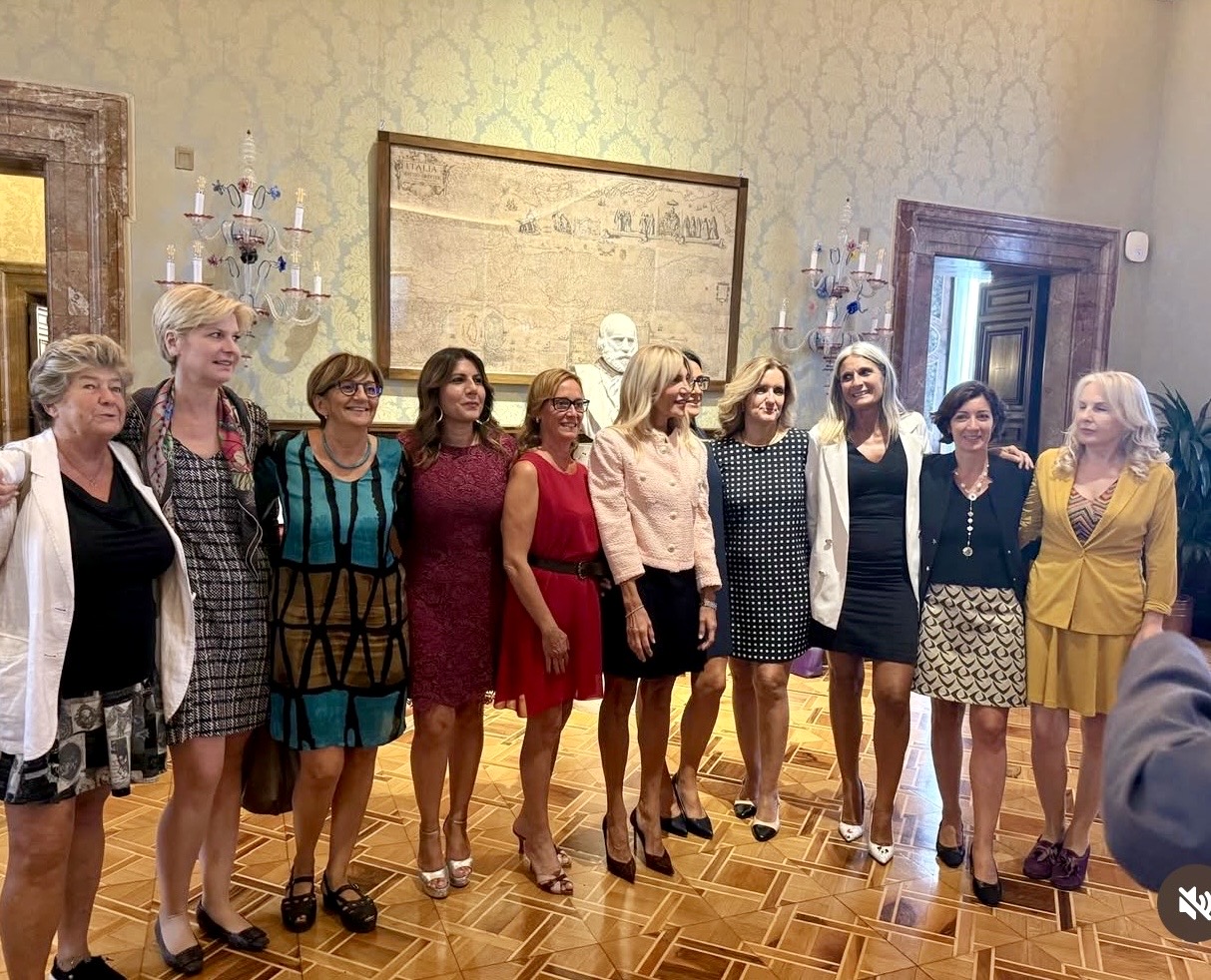


In Italy, remarks by Foreign Minister Antonio Tajani linking longer skirts with fidelity, reliability and being a “good mother” have sparked a political backlash. Female lawmakers responded with miniskirts, turning clothing into a symbol of resistance to the idea that a woman’s character, sexuality or credibility can be judged by what she wears.
How many inches of fabric does it take for a woman to be considered respectable?
The question has unexpectedly moved to the center of Italian politics after comments by Antonio Tajani, Italy’s deputy prime minister, foreign minister and leader of Forza Italia, the center-right party founded by Silvio Berlusconi.
Speaking at a political event in Formello, near Rome, Tajani used marriage as a metaphor for political choice. Imagining the advice he might give his son about choosing a wife, he contrasted a more “glamorous” woman who had changed boyfriends several times and might be unfaithful with another woman he described as less conspicuous, more reliable and more serious.
The second woman, he suggested, would be more likely to become a “good mother” and remain faithful to her commitments. Tajani then added another detail: she might also wear “slightly longer skirts.”
His broader point was about political reliability. He also used a male comparison, contrasting a muscular “playboy” with a man who goes to the office in a suit and tie. But it was the connection he drew between women’s clothing, fidelity, motherhood and reliability that triggered a political controversy.
Chiara Appendino Responds to Antonio Tajani — in a Miniskirt
One of the most striking responses came from Chiara Appendino, a member of parliament from the Five Star Movement and former mayor of Turin.
Appendino posted a photograph of herself wearing a miniskirt and addressed Tajani directly.
“Am I not a reliable woman? Am I not a good mother?” she asked, before delivering the line that quickly captured the controversy: “Our reliability is not measured in inches of fabric.”
The image reversed the symbolism of Tajani’s remarks. If a longer skirt was being associated with seriousness and reliability, Appendino deliberately chose a miniskirt to challenge the premise itself.
Her message was not that short skirts were preferable to long ones. It was that neither should be used to determine a woman’s character.
Other female politicians joined the criticism. Maria Elena Boschi of Italia Viva sarcastically questioned whether Italy would now need rules governing skirt lengths in schools, workplaces or Parliament, while Democratic Party Senator Valeria Valente criticized what she saw as an outdated model of women defined by devotion to husbands, children and traditional notions of respectability.
Female Senators Bring the Miniskirt Protest to Italy’s Parliament
The backlash soon moved from social media to the Italian Senate.
On September 22, female senators from several opposition parties gathered at Palazzo Madama, home of the Italian Senate, wearing skirts and miniskirts. The initiative was led by Raffaella Paita, the Senate leader of Italia Viva, and brought together lawmakers from the Democratic Party, Five Star Movement, Greens and Left Alliance, Italia Viva and the Autonomies group.
“We are free to dress as we want,” Paita said, presenting the protest as a statement about women’s freedom to choose their clothes without having their character judged by men.
The symbolism was simple but effective: the garment that had been used to categorize women became the garment through which women answered back.
Five Star Movement Senator Alessandra Maiorino joined the demonstration wearing a long skirt and used irony to make the same point: “At least I’m more reliable,” she joked, referring directly to Tajani’s comments.
The protest transformed what might have remained a controversy over one politician’s remarks into a broader conversation about a persistent double standard: why should a woman’s clothing still be treated as evidence of her morality, sexuality or credibility?
Roberto Vannacci: “I Prefer No Skirt”
The controversy intensified when Roberto Vannacci, a former general and leader of Futuro Nazionale, was asked on Sky TG24 whether he preferred women in long or short skirts.
His answer: “Between a long skirt and a short skirt, I prefer no skirt.”
Vannacci later said the question had been lighthearted and that he had responded in the same spirit. His comment nevertheless prompted another wave of criticism and became part of the senators’ protest at Palazzo Madama.
What began with an association between a longer skirt and a “serious” woman had now moved from judging women’s clothing to making a remark about women wearing none at all.
Antonio Tajani Apologizes
As the controversy grew, Tajani addressed the backlash from New York, where he was attending the United Nations General Assembly.
“I apologize if anyone felt offended by what I said, but I never intended to offend women,” he said.
Tajani defended his record on women’s rights, pointing in particular to his decision to appoint female Italian ambassadors to Iran and Afghanistan, which he described as a signal of Italy’s commitment to women’s rights.
His apology, however, did not end the broader debate sparked by his words.
Because beyond Tajani’s stated intention lies a familiar stereotype: the idea that a woman’s appearance reveals something about her virtue.
When a Woman’s Skirt Becomes a Measure of Her “Virtue”
The controversy is significant because several characteristics that have no necessary connection are brought together in the original comparison: a woman who is less conspicuous wears a longer skirt, is supposedly more faithful and reliable, and may become a better mother.
Clothing effectively becomes a proxy for character.
That logic has a long history. Women’s clothes have repeatedly been used to divide them into categories — respectable or provocative, serious or frivolous, modest or sexually available.
The same assumptions can extend beyond clothing. A judgment about appearance can quickly become a judgment about sexuality, motherhood, professional credibility or even whether a woman deserves respect.
Appendino’s response — that a woman’s reliability cannot be measured in “inches of fabric” — goes directly to the heart of that mechanism.
The Italian senators’ protest makes the same point visually. They are not defending miniskirts against long skirts. They are defending a woman’s right to wear either without having the length of her clothes interpreted as evidence of her fidelity, sexuality, ability to be a mother or political credibility.
In Italy, the Miniskirt Becomes a Political Statement
Within days, Tajani’s metaphor had produced a striking sequence of events: Italy’s foreign minister associated a longer skirt with a more serious and reliable woman; a former female mayor responded by posing in a miniskirt; senators carried the protest into Parliament; Vannacci added his “no skirt” remark; and Tajani ultimately apologized.
The debate therefore goes far beyond fashion.
It raises a question women have faced for generations: Why should what a woman wears still be treated as a measure of who she is?
In Italy, female politicians chose to answer using the very symbol that had been used to judge them.
When the length of their skirts was turned into a measure of their character, they turned the miniskirt into a political voice.