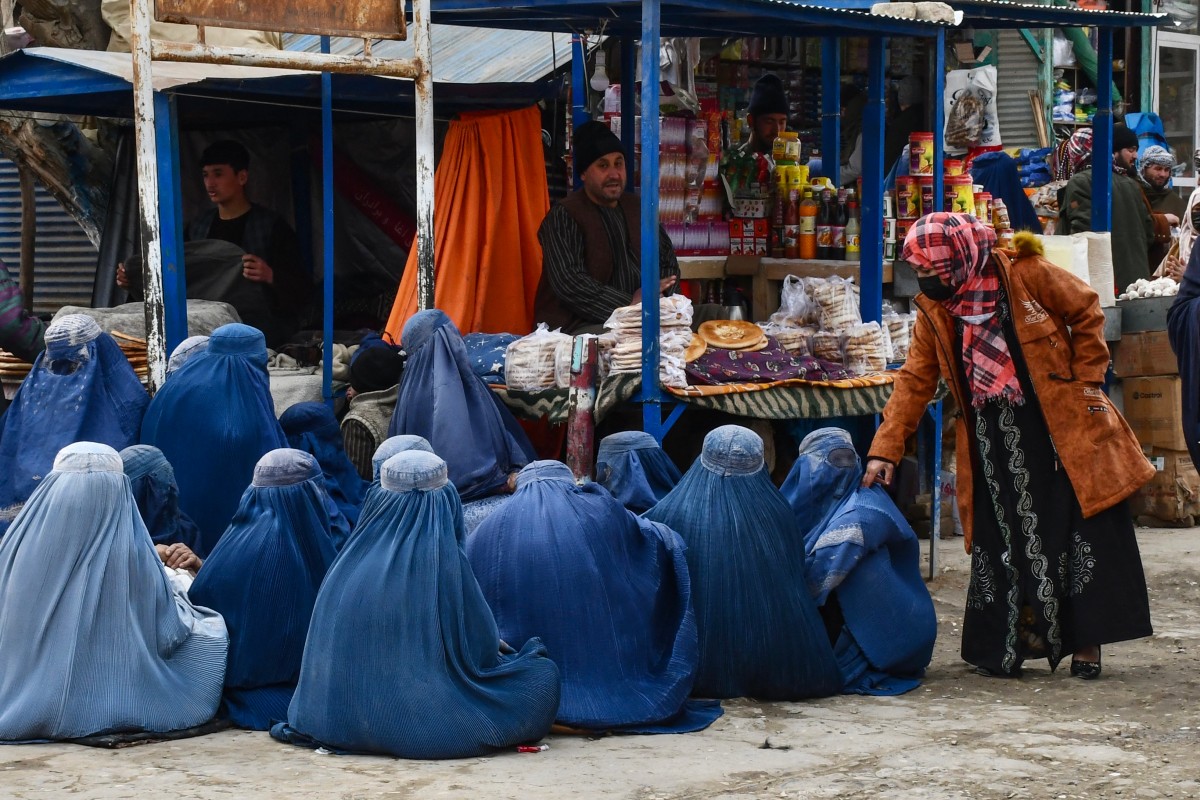


Afghan women have been pushed out of classrooms, jobs and public life. Now, reporting from northern Afghanistan describes an order requiring healthcare providers to replace female patients’ names with “Bibi,” including on prescriptions. The instruction, reported in Balkh province, targets something fundamental: recognition as an individual. Its nationwide implementation has not been established.
A woman seeking medical care needs to be recognized as a patient with her own history, symptoms and treatment. In Afghanistan’s northern Balkh province, even the use of her name is reportedly being restricted.
A Zan Times investigation published with The Guardian on November 12, 2026 describes instructions to hospitals and clinics to substitute “Bibi” for women’s names, including on prescriptions. The reporting places the measure within a wider crackdown on women’s access to medical treatment.
The distinction between a reported local instruction and a nationwide law matters. But so does the context: since retaking power in August 2021, the Taliban have progressively reduced women’s ability to learn, earn, move freely and participate in public life. Naming belongs to that same question of power—whether a woman is recognized in her own right.
What do we know about the Taliban order targeting women’s names?
The reporting identifies Balkh province, rather than a publicly documented nationwide ban. Zan Times says morality officials instructed healthcare facilities to use “Bibi” instead of female patients’ actual names. Its investigation does not establish how consistently the instruction is being followed.
In additional reporting published by El País, Afghan women described restrictions extending to official documents. One activist said the order was not yet being observed. These accounts warrant scrutiny; they do not establish that every Afghan woman has already lost the right to use her name.
“Bibi” can be a respectful form of address for an older woman. The concern is its compulsory substitution for an individual identity, rather than the word itself. An honorific freely used in conversation and a generic label imposed on a medical document have different consequences.
Removing a name does not necessarily erase every identifier in a record. A facility might retain a patient number or other details. Nevertheless, requiring women alone to surrender their names sends a clear message about whose individual identity deserves recognition.
Why does a woman’s name matter for her rights?
Afghan women’s struggle to have their names recognized predates the Taliban’s return. Conservative customs have sometimes identified women through male relatives rather than by their own names, including on family documents and gravestones.
Activist Lalah Osmany’s #WhereIsMyName campaign challenged that practice. Launched in 2017, the movement helped secure a change in 2020 allowing mothers’ names on their children’s identity documents. El País recalls that achievement alongside the new reports from Balkh.
The issue reaches beyond symbolism. Documents connect people to family relationships, services and legal claims. When a woman’s identity is omitted, proving those connections can become harder. The practical consequences depend on the document and the legal system involved; they should not be treated as identical in every case.
For American readers, the underlying principle is familiar: an institution cannot reliably recognize someone’s rights while treating her individual identity as something improper to record. A name alone cannot guarantee equality, but its deliberate exclusion can reinforce unequal treatment.
As The Women’s Voices previously examined in its coverage of women’s rights under Taliban rule, the restrictions operate together. Their significance lies in how they reshape women’s relationship with institutions, income and public space.
Which rights have Afghan women lost under Taliban rule?
In its August 2026 assessment of five years of Taliban rule, UN Women documented more than 100 decrees targeting women and girls. Education, employment, healthcare, movement and access to justice are among the areas affected.
The education crisis is measurable. UNESCO and UNICEF reported on November 4, 2026 that more than 2.6 million girls had been denied secondary education since 2021. University restrictions also continue to exclude women. Alternative classes and remote learning cannot replace access to a full education system.
These barriers have consequences beyond the school years. Preventing girls from continuing their education restricts the qualifications they can obtain, the income they can earn and the professions they can enter. It also reduces the future supply of women trained to provide essential services.
Rules requiring a male relative, or mahram, for certain movements can create another layer of dependence. A woman’s ability to attend an appointment may become contingent on someone else’s availability or permission.
The cumulative effect is critical. A restriction on studying can become a restriction on earning. A restriction on earning can make leaving an abusive household more difficult. Limits on movement can obstruct access to help. Each measure can magnify the consequences of the others.
How could removing women’s names make healthcare harder to access?
Medical care depends on distinguishing one patient from another. Replacing names with a shared label raises questions about matching prescriptions, following treatment and retrieving medical histories. These are potential risks, rather than documented outcomes of the reported Balkh instruction; other identifiers may remain in use.
The wider barriers are already being reported. Zan Times interviewed patients and healthcare workers about restrictions on male practitioners treating women. Its investigation describes women unable to complete treatment and providers working under threats of punishment.
UN Women separately warns that movement restrictions and shortages of female health professionals are worsening access to care. It reports that seven in ten women describe their mental health as bad or very bad, illustrating the broader toll of confinement and lost opportunities.
There is a structural contradiction in restricting women’s access to male practitioners while closing pathways through which women could become qualified providers themselves. The problem cannot be solved simply by telling patients to find a female specialist if the training pipeline is being dismantled.
Seen in that context, the reported naming instruction adds an administrative barrier to an already constrained encounter. The patient must navigate the system while the system further diminishes recognition of her as an individual.
Can Taliban leaders face accountability for persecuting women?
International criminal proceedings provide an important legal framework for understanding the restrictions. The issue is not limited to isolated acts of physical violence; it also concerns the organized deprivation of fundamental rights.
On October 5, 2026, the International Criminal Court made public four arrest warrants in its Afghanistan proceedings. They concern Taliban supreme leader Haibatullah Akhundzada, chief justice Abdul Hakim Haqqani, Habibullah Agha and Neda Mohammad Nadim. The first two warrants had been publicly announced in July 2025.
The court found reasonable grounds to believe the suspects bore responsibility for the crime against humanity of persecution on gender and political grounds. Arrest warrants are not convictions. Nor do these proceedings constitute a judicial ruling on the newly reported naming instruction.
The broader system is often described as gender apartheid. The ICC warrants specifically concern persecution, a distinction that matters when describing the legal proceedings accurately.
Afghan women also continue to document what is happening. The Women’s Voices’ coverage of Bread & Roses, the documentary about Afghan women’s resistance, explores how women have recorded their experiences despite efforts to exclude them from public view.
Their accounts challenge the idea that exclusion means consent or silence. They also make independent Afghan journalism essential: restrictions cannot be scrutinized if the people experiencing them cannot safely describe their effects.
The Balkh instruction has not been established as a nationwide ban. Its reported existence nevertheless exposes a defining feature of the Taliban’s treatment of women: control reaches beyond what they may do, into how institutions acknowledge who they are.
After restricting Afghan women’s education, work and movement, the reported targeting of their names brings that struggle to its most basic level—the right to be recognized as a person in her own name.