
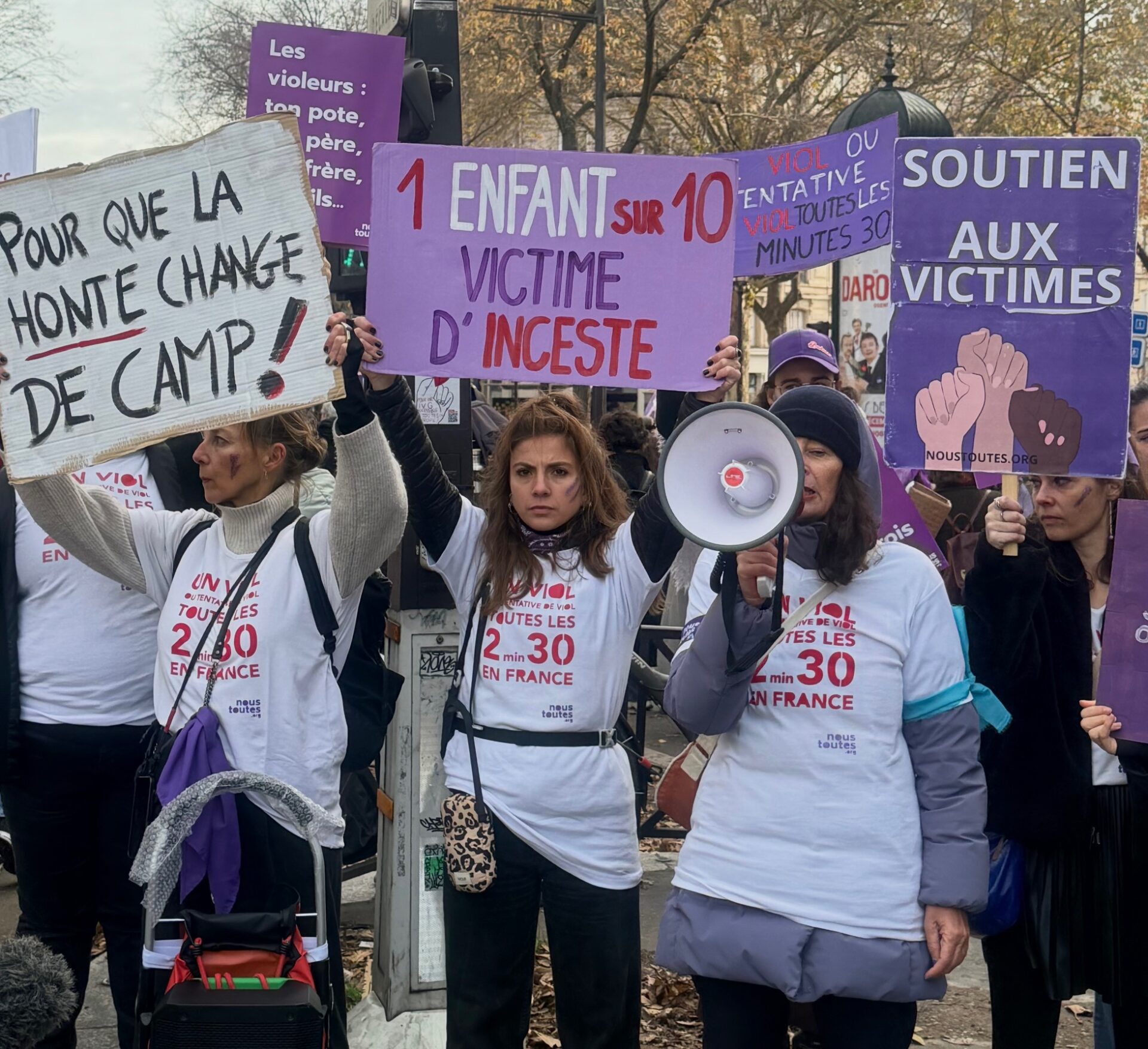


French feminist groups will march in Paris on Saturday, November 28, to press the Senate to pass a sweeping bill against sexual and sexist violence before Parliament breaks for the 2027 presidential campaign. The bill would require police to take specific investigative steps, create hospital-based support centers for survivors and introduce mandatory interviews in schools to detect abuse. Campaigners want senators to strengthen the text and secure the funding to carry it out.
The Fondation des Femmes and the coalition backing the bill will join the march from the Panthéon at 2 p.m. The demonstration will begin with a tribute to victims of femicide and their children before heading to Place d’Italie. It follows the November 25 International Day for the Elimination of Violence Against Women and puts the spotlight on the Senate, where the legislation known as the loi intégrale is awaiting debate.
Why are French feminists marching on November 28?
In 2025, 111 women were killed by a current or former partner in France, according to the Interior Ministry. Police and gendarmes recorded nearly 285,000 instances of victimization involving intimate partner violence, up 5% from 2024. Women accounted for 84% of those records. The figures can count the same person more than once if several offenses were recorded. A separate national survey found that only 13% of people who had experienced intimate partner violence said they had filed a complaint with police or gendarmes.
The demand for a comprehensive law gained visibility during the Mazan rape trial. As The Women’s Voices reported during the “We Are All Gisèle” protests, the Fondation des Femmes was already calling for such legislation in 2024. France amended its criminal definition of rape and sexual assault in 2025 to explicitly address consent. The current bill takes up a broader question of how the justice system, health services and schools respond when someone experiences or discloses abuse.
What would France’s sexual violence bill change?
France’s Institute for Public Policy found that 94% of the rape cases it analyzed for 2020 were closed without prosecution, up from 86% in 2016. The bill approved by the National Assembly would establish a minimum set of steps for investigators handling sexual, sexist or family violence cases. It also spells out what survivors should be able to access through hospitals and how schools would look for signs of abuse.
- Investigations. Police would have 12 months from the opening of an investigation to complete specified steps, including interviewing the survivor if they consent, taking steps to preserve relevant forensic or digital evidence, and looking for other potential victims. The bill also provides for specialized police units and greater specialization in the courts.
- Medical care and forensic evidence. Every French département would have a hospital-linked center offering medical care, psychological support and forensic examinations. Survivors could file a complaint on site, and the center could preserve forensic samples while they decide whether to report the assault.
- Child protection. Schools would hold mandatory one-on-one interviews without parents or guardians present to look for signs of abuse. During the transition, the bill provides for four interviews over the course of a student’s schooling, with annual interviews due to begin in January 2032.
What do campaigners want the Senate to strengthen?
The coalition says lawmakers weakened or removed safeguards for children, foreign women, survivors of workplace violence and victims of online sexual exploitation. It also wants broader coverage for care related to psychological trauma. Its November 25 appeal asks senators to restore those protections while preserving the advances already secured in the Assembly.
The Fondation des Femmes also emphasizes what it takes for a woman to leave an abusive partner. She may need somewhere safe to stay with her children, help moving out, psychological care and legal advice. Those needs can arise at once, and legal support may be needed through trial. The foundation says the specialist organizations that provide this help are already struggling to meet demand.
How would the €3 billion a year be funded?
The Assembly text sets out €3 billion a year from 2027 through 2032, or €18 billion over six years, to address sexual, sexist and family violence. It also calls for a report accompanying each annual budget bill to track the spending and show how funding is distributed across France. The coalition wants lasting funding for the justice system, health services, schools, child protection, labor inspectors and specialist nonprofits.
How the money is allocated will determine whether hospitals can staff the proposed centers, whether schools have trained professionals available to conduct the interviews, and whether investigators can carry out the required steps within a year. Each of those measures depends on a different public service, which makes the annual budget central to whether survivors see a change in practice.
Can France pass the bill before the 2027 presidential election?
The National Assembly adopted the bill at first reading on October 13, 2026, by 503 votes in favor, none against and 67 abstentions. The Senate’s Law Committee appointed four lawmakers to lead its review on November 18. January 2027 is the expected window for debate, although the Senate’s official bill tracker listed no date for a floor debate as of November 27.
France’s parliamentary broadcaster LCP reported that the aim is final passage by the end of February, when parliamentary work is expected to pause for the presidential campaign. A January debate would leave only weeks for the two chambers to resolve any differences. That is the demand behind Saturday’s march: campaigners want the Senate to take up the bill early enough to strengthen protections and still give Parliament time to pass it before the election recess.